| Wed. February 18, 2026 |
 |
|
||
|
||||
| ||||


The year 2026 is welcomed by looming threats of nuclear weapons more than ever, when the world is faced with eroding arms control agreements, and the global environment seems increasingly fragile. With several key treaties set to expire in 2026 and countries rapidly expanding their nuclear arsenals in response to growing international conflict, while countries like Japan and Saudi Arabia are in the race, aspiring for nuclear weapons, 2026 will be a defining moment. As diplomats of non-proliferation continue to call for disarmament, reality dictates that such talk is largely fantasy rather than a clear roadmap forward, necessitating a realistic assessment of the challenges that lie ahead.
The majority of the world’s approximately 12,100 nuclear weapons are held by just a handful of major world powers. The US and Russia hold nearly 87 percent of the world’s nuclear weapons, with Russia possessing approximately 5,500 and the US holding approximately 5,177 many of which remain in a state of high alert. China possesses about 600 operational nuclear weapons, with the number having grown by over 100 recently. France, possessing 290, the UK, 225, India, 180, and Pakistan, 170, have all maintained relatively stable stockpiles through modernization efforts. In addition, North Korea maintains approximately 50 nuclear weapons, but is aggressively developing its nuclear capabilities, including the development of solid-fueled ICBMs and nuclear-capable submarines with Russian backing. These developments display the growth in nuclear arsenals and nuclear technology, rather than a reduction in them. The growth includes the qualitative development of nuclear technology, such as hypersonic vehicles and Multiple Independently Targetable Reentry Vehicles (MIRVs), which has undermined the existing balance in the arms race established as a result of the Cold War.
The New Strategic Arms Reduction Treaty (New Start), which remains the last bilateral US-Russian nuclear weapons agreement, is scheduled to expire on February 5, 2026, without any proposed replacements because of disagreement on the treaty's terms. In 2023, Russia had withdrawn from inspection and data sharing provisions in relation to Ukraine, but the two countries have continued to voluntarily meet their respective limit requirements under the treaty since then. If the treaty is allowed to lapse, it is anticipated that each side could begin to increase their nuclear weapons arsenal, which could prompt other nuclear-capable states, including China, to do likewise.
Additionally, the upcoming review conference of the Treaty on the Non-Proliferation of Nuclear Weapons (NPT) set to occur in New York in April 2026, presents additional challenges. Past NPT review conferences have been unable to reach a consensus primarily as a result of the anger expressed by non-nuclear states toward nuclear-armed states for failing to meet their obligations under Article VI of the treaty to pursue disarmament. As a result of this failure, several treaties relating to the regulation of nuclear weapons, including the Comprehensive Test Ban Treaty (CTBT) have been signed but not ratified by key signatory states and therefore lack the needed verification mechanisms.
Therefore, while Iran may be motivated to obtain nuclear weapons for the purpose of providing a deterrent against Israel's expanding conventional and nuclear capabilities, Iran's nuclear weapons program is one of the most pressing issues confronting the United States and Israel today. Iran is now stockpiling uranium-enriched to 60% levels that are very close to the level of enrichment required for the production of nuclear weapons. Iran is also developing new centrifuges at its underground facility, known as Fordow, and is shortening the time it takes to produce a nuclear weapon despite continuing economic sanctions and airstrikes against its military assets. In addition, North Korea indicated that 2025 would be a "crucial year" for its nuclear weapons development program and announced that it successfully tested its Hwasong-20 Intercontinental Ballistic Missile (ICBM) and has increased the size of its nuclear facility at Yongbyon; it intends to complete construction of missile factories by 2026. Regional conflicts on the Korean Peninsula and in the Middle East, especially those involving Iran and Israel continue to pose a high risk of unintended escalation in the increasingly complex and multi-polar world we live in today.
Disarmament seems to be nothing more than a relic of a bygone era, even as nuclear-armed states engage in modernization efforts, and even as the language used by these states appears to lower the threshold for using these weapons, from Russia’s nuclear threats regarding Ukraine to the lowering of nuclear alert status. Verification is touted by some as possible through the International Atomic Energy Agency (IAEA); however, the great powers are unwilling to provide the level of transparency needed to verify compliance with any proposed disarmament treaty. Furthermore, although non-proliferation efforts have successfully limited the number of new nuclear weapons being developed, until nuclear-armed states reduce their own arsenals, non-proliferation efforts will remain a hollow pillar.
In 2026, expected continued expansion of nuclear arsenals by the great powers in addition to the expiration of New START expect the NPT Review Conference to fail, thereby further weakening the NPT regime and anticipate the emergence of additional technologies such as artificial intelligence command systems and hypersonic vehicles that blur the line between conventional and nuclear capabilities, which combined with the proliferation activities of states such as Iran and North Korea, will test the limits of diplomatic efforts to prevent conflict and miscalculations, especially given the increasing tensions between great powers.
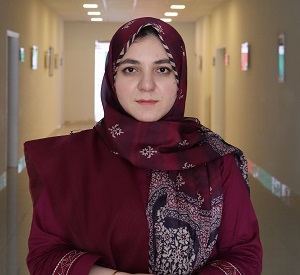
Ms. Harsa Kakar is an Assistant Research Fellow at Balochistan Think Tank Network (BTTN), at BUITEMS, Quetta. She is a distinguished graduate of International Relations from the University of Balochistan. She specializes in AI, Diplomacy, Soft Power, and Conflict Resolution.
| Comments in Chronological order (0 total comments) | |
| Report Abuse |
| Contact Us | About Us | Donate | Terms & Conditions |


|
All Rights Reserved. Copyright 2002 - 2026