| Sat. March 14, 2026 |
 |
|
||
|
||||
| ||||


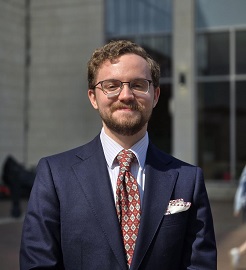
By Iuri Macedo Piovezan
In Brazilian politics, the line between political movement and political family has often been thin. Yet the current discussion over whether Flávio Bolsonaro could inherit the political mantle of his father, Jair Bolsonaro, makes that ambiguity unusually explicit. If Bolsonarismo can simply pass from father to son, then the question is unavoidable: was it ever a movement at all, or merely a personal brand built around one surname?
The rise of Jair Bolsonaro was not the product of a traditional party machine. When he won the presidency in 2018, he did so while belonging to the small and previously marginal Social Liberal Party (PSL), demonstrating how little institutional structure underpinned his political coalition.[1] His campaign relied far more on personal appeal, anti-establishment rhetoric, and mobilization through social media than on the organizational networks that historically sustained Brazilian political parties.[2] The political identity of his supporters became tied to Bolsonaro himself—his rhetoric, his confrontational style, and his portrayal of himself as an outsider battling corrupt elites.
This personalization has consequences. Political movements built around charismatic authority rarely transfer easily to successors. The sociologist Max Weber famously argued that charismatic leadership rests on the perceived extraordinary qualities of a particular individual rather than on institutional legitimacy.[3] Such authority is inherently unstable once the founding figure disappears or loses power. Historically, movements that survive this transition usually do so by institutionalizing themselves into parties or ideological coalitions. Without such structures, they tend either to fragment or to devolve into family-centered politics.
The possibility that Flávio Bolsonaro could become the political heir to Bolsonarismo therefore raises a structural problem. Unlike his father, he is not a political outsider but a long-time officeholder, having served as a state deputy in Rio de Janeiro before becoming a senator in 2019.[4] His career reflects the gradual expansion of the Bolsonaro family’s presence in Brazilian politics rather than the emergence of a new ideological leadership. Indeed, the broader Bolsonaro political network already includes several family members in public office, including Eduardo Bolsonaro in the federal Chamber of Deputies and Carlos Bolsonaro in Rio de Janeiro’s municipal government.[5]
Such family-centered political structures are not unique to Brazil. Dynastic politics has appeared across democracies, from the Nehru–Gandhi family in India to the Bush and Kennedy families in the United States. These cases illustrate an important pattern. Dynasties most often arise after a political movement or party has already become institutionalized.[6] Where durable political organizations and recognizable party labels exist, leadership can circulate within an established political brand, allowing successors to benefit from the name recognition and networks created by earlier officeholders.[7] Yet this relationship is not universal. Some movements generate dynastic politics even without strong institutional foundations. Peronism in Argentina provides a clear example. Although the movement survived the death and exile of Juan Domingo Perón and later produced figures such as Néstor Kirchner and Cristina Fernández de Kirchner, scholars frequently describe Peronism as weakly institutionalized and highly personalistic, organized around shifting factions rather than a stable party structure.[8]
In this respect, Bolsonarismo faces a dilemma. Its political energy derived largely from Jair Bolsonaro’s personal style and confrontational populism. He positioned himself as a champion of conservative voters frustrated with corruption scandals and economic stagnation, particularly in the aftermath of the sweeping investigations associated with Operation Car Wash.[9] Yet this appeal was less ideological than personal. The movement coalesced around Bolsonaro’s identity and rhetoric rather than around a coherent policy program or organizational apparatus capable of sustaining leadership transitions.
That personalism complicates the notion of hereditary succession. Charisma is not inherited.[10] A political brand may persist beyond the leader who created it, but the personal bond that sustains populist mobilization is difficult to reproduce through family succession. Scholars of populism frequently emphasize that such movements revolve around a central leader who cultivates a direct relationship with followers; when that figure leaves the political stage, the movement often faces instability or fragmentation because its legitimacy rests primarily on the leader rather than on durable institutions.[11]
Brazil’s political right therefore faces a broader question than simply who might lead it after Jair Bolsonaro. If the movement becomes centered on maintaining the political prominence of one family, it risks narrowing its appeal and limiting its capacity to evolve into a durable ideological force. Alternatively, new leaders—perhaps governors, legislators, or figures emerging from outside the Bolsonaro orbit—could reshape the conservative coalition into something less dependent on personal loyalty.
The debate over Flávio Bolsonaro’s potential succession thus reveals a deeper truth about the nature of Bolsonarismo itself. Genuine political movements tend to outlive their founders because they are built on ideas, organizations, and institutions. Dynasties, by contrast, persist through names. If the future of Brazil’s populist right depends primarily on the Bolsonaro surname, it may suggest that Bolsonarismo was never a movement in the conventional sense at all.
Iuri Macedo Piovezan is a J.D. candidate, Class of 2027, at Rutgers Law School and a member of the Rutgers University Law Review. He holds a master’s degree in political science from Villanova University, where he graduated with distinction in 2024. One can see his publications on populism and polarization in the Georgetown Public Policy Review, Penn Political Review, Carolina Political Review, the Brazilian Times, among others.
[1] Wendy Hunter and Timothy J. Power, “Bolsonaro and Brazil’s Illiberal Backlash,” Journal of Democracy 30, no. 1 (2019): 68–69.
[2] Caio C. V. Machado, “WhatsApp’s Influence in the Brazilian Election and How It Helped Jair Bolsonaro Win,” Council of Foreign Relations, November 13, 2018, https://www.cfr.org/articles/whatsapps-influence-brazilian-election-and-how-it-helped-jair-bolsonaro-win; See also Gleice Mattos Luz and Claudia Alvares, “Mediating Bolsonarism on Facebook: Religion, Technopolitics and Activism in Grassroots Digital Networks, Media, Culture & Society 48, no. 2 (2025).
[3] Jay A. Conger, “Max Weber’s Conceptualization of Charismatic Authority: Its Influence on Organizational Research,” The Leadership Quarterly 4, no.3-4 (1993): 278-80.
[4] “Flavio Bolsonaro—Sobre Mim,” Flavio Bolsonaro, accessed March 11, 2026, https://www.flaviobolsonaro.net/sobre-mim.
[5] “Eduardo Bolsonaro,” Camara dos Deputados, accessed March 11, 2026, https://www.camara.leg.br/deputados/92346 (though it is important to emphasize that Eduardo is lost his post in the Chamber of Deputies); See also “Sem mandato, Eduardo Bolsonaro tera que voltar ao cargo na Policia Federal,” Carta Capital, January 2, 2026, https://www.cartacapital.com.br/politica/sem-mandato-eduardo-bolsonaro-tera-de-voltar-ao-cargo-na-policia-federal/; See also “Flavio Bolsonaro—Sobre Mim.”
[6] Ade Irfan Abdurahman et al., “Political Dynasties in the Age of Democracy: A Bibliometric Study of Global Research Patterns and Future Directions,” Social Sciences & Humanities Open 12 (2025): 2-3.
[7] Jon H. Fiva and Daniel M. Smith, “Political Dynasties and the Incumbency Advantage in Party-Centered Environments,” American Political Science Review 112, no. 3 (2018): 710; See generally Ronald Mendoza, Jan Fredrick Cruz, “Dynasties versus Development,” Center for Economic Policy Research, August 31, 2015, https://cepr.org/voxeu/columns/dynasties-versus-development.
[8] Veronica Herrera, “The Persistence of Peronism,” Center for Latin American Studies (2007): 46 (“In this context, Peronism became a weakly institutionalized party led by the strongest labor movements in Latin America.”).
[9] Caio Quero, “From Political Outsider to a President Like no Other: Bolsonaro’s Rise and Fall,” BBC, September 12, 2025, https://www.bbc.com/news/articles/c5yqendv7k5o; See also Jonathan Watts, “Operation Car Wash: Is This the Biggest Corruption Scandal in History?,” The Guardian, June 1, 2017, https://www.theguardian.com/world/2017/jun/01/brazil-operation-car-wash-is-this-the-biggest-corruption-scandal-in-history.
[10] See, e.g., Chung Joong-Gun, “Charisma and Regime Legitimacy: Political Succession in North Korea,” The Journal of East Asian Affairs 7, no. 1 (1993); See also Patrick McEachern, “Marching Toward a U.S.-North Korea Summit: The Historical Case for Optimism, Pessimism, and Caution, Texas National Security Review 1, no. 3 (2018) (“While Kim Il Sung was known for his charisma, Kim Jong Il could not even manage to give the annual new year’s day address.”).
[11] Cas Mudde and Cristóbal Rovira Kaltwasser, Populism: A Very Short Introduction (Oxford University Press, 2017), 4 (“populism implies the emergence of a strong and charismatic figure… seen from this perspective, populism cannot persist over time, as the leader sooner or later will die and a conflict-ridden process for his replacement is inevitable.”); See also Ibid., 59 (“These types of leaders are usually very bad at building institutions… By constructing a personalist electoral platform rather than a well-organized political party… they have serious problems succeeding in terms of electoral persistence.”).
| Comments in Chronological order (0 total comments) | |
| Report Abuse |
| Contact Us | About Us | Donate | Terms & Conditions |


|
All Rights Reserved. Copyright 2002 - 2026