| Mon. May 18, 2026 |
 |
|
||
|
||||
| ||||


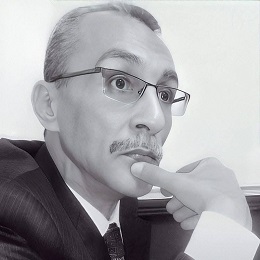
By Muhammad Adel Zaky
There is a way of talking about history that most of us have heard so often that it almost feels natural. Societies move in stages: slavery, then feudalism, then capitalism. Each stage is supposed to have its own logic, its own structure, its own "system." Over time, this idea stopped being just a theory and became something like common sense.
But when you sit with it for a while, it starts to feel a bit too clean. Too neat. History rarely behaves that neatly.
The theory of the mode of production tells us to look at societies and classify them according to their dominant form: slave society if slavery is widespread, feudal if serfdom dominates, capitalist if wage labor is central. On paper, it sounds organized. But in practice, it often feels like we are just putting labels on the surface of things without really asking what is going on underneath.
And that is the real issue. Because once you start looking at actual historical societies, the picture becomes messy in a way the theory does not fully admit. Take Athens or Rome. Yes, slavery existed there, and often in harsh forms. No one denies that. But was that the whole story of their economy? Not really. There were markets everywhere, trade networks stretching across regions, money changing hands constantly, workshops producing for sale, merchants making fortunes, and forms of labor that look closer to wage work than pure coercion.
So already the picture is not a "slave system" in any pure sense. It is mixed. Layered. Uneven. The same thing happens if we move to the medieval world. The usual image is of a closed, local economy where people mostly produce what they consume. But again, the reality is more complicated. Medieval towns were full of trade. Goods moved. Money circulated. Artisans produced for markets, not just for survival. Even agriculture, in many regions, was tied to exchange in ways that are hard to ignore.
Sometimes people point to moments like the early Middle Ages under Charlemagne as evidence of a non-commercial economy. But even there, what we are often seeing is not a different system so much as a disruption. Trade shrinks, routes break down, politics becomes unstable. And then, when things settle again, exchange comes back. Markets return. Money returns. The structure reappears.
So maybe the question is not: which "mode of production" is this society in? Maybe the question is something simpler, but also harder: what keeps economic life moving, even when political forms change?
Because one thing seems consistent across very different times and places. People produce, they exchange, and value circulates. Sometimes through trade, sometimes through production for markets, sometimes through financial relations. The forms shift a lot, but the basic movement keeps returning.
This is where the neat division between "pre-capitalist" and "capitalist" societies starts to feel less convincing.
Capitalism is usually treated as something that begins in modern Europe, tied to factories, industrialists, and a specific political order. That picture is not wrong exactly, but it is incomplete. It focuses too much on the visible form of modern capitalism and not enough on the underlying logic that makes it work.
If capitalism is understood more broadly as a system where production and exchange are organized around accumulation, profit, and the movement of value, then it becomes harder to treat it as something that suddenly appears at a single historical moment. Elements of that logic show up earlier, in different shapes, in different contexts.
Not identical. Not fully developed. But present. A merchant buying cheap and selling dear is not a modern invention. Neither is production aimed at exchange, nor financial lending aimed at return. What changes over time is scale, intensity, organization, and the reach of these processes—not necessarily their existence.
And this is where the traditional theory of the mode of production begins to feel strained. It assumes that once we identify the dominant political or legal form of a society, we understand its economic essence. But that does not always work. Societies can have slavery and markets at the same time. They can have feudal hierarchies and strong commercial networks. They can mix coercion and exchange in ways that do not fit neatly into one category.
The surface does not always match the structure. There is also another problem. When history is divided too sharply into stages, we tend to imagine breaks that are cleaner than they really were. But if you look closely, transitions are often slow, uneven, and full of overlap. Old forms continue inside new ones. New forms appear inside old ones. It is rarely a clean replacement.
So, the question becomes less about naming systems and more about understanding how economic processes actually operate inside different social arrangements. How is production organized? How does exchange function? How does value move? These questions cut deeper than labels.
And once you start thinking this way, capitalism begins to look less like a single historical "stage" and more like a general logic that becomes dominant in some periods, weaker in others, but never entirely absent from the history of exchange-based societies.
What modern capitalism does is intensify this logic. It expands it. It globalizes it. It makes it more systematic and more dominant than before. But it does not necessarily invent it from nothing.
This does not mean all societies are the same. They are not. The differences are real and important. Political systems differ, technologies differ, institutions differ. But the underlying economic mechanisms often show more continuity than the usual narrative suggests.
At some point, then, the useful distinction may not be between slavery, feudalism, and capitalism as sealed historical blocks. It may be between different ways in which societies organize production and exchange under changing conditions. Once you shift the focus like that, the history of economic life starts to look less like a staircase and more like a long field of overlapping patterns. And maybe that is where political economy becomes something closer to a real inquiry again—not a system for labeling history, but a way of trying to understand how economic life actually moves, even when the forms around it keep changing.
What this article directly seeks to assert is that capitalism is the subordination of production and distribution in society to the laws of capital movement, regardless of the dominant form of social organization or the stage of development of the prevailing social productive forces. It is this perspective alone that enables us to forge a critical consciousness of the nature of economic activity as a social endeavor that creates the wealth upon which our daily social reproduction depends. Such consciousness allows us to engage with all economic phenomena with intelligence and efficacy, free from stultifying revolutionary rhetoric and the distortion of truth for the sake of a false ideological victory that only drags us backward.
Muhammad Adel Zaky is an Egyptian researcher specializing in the history of economic thought. He is the author of Critique of Political Economy, a book that has gone through six editions. His research explores the evolution of economic ideas in relation to social and historical change.
| Comments in Chronological order (0 total comments) | |
| Report Abuse |
| Contact Us | About Us | Donate | Terms & Conditions |


|
All Rights Reserved. Copyright 2002 - 2026