| Mon. May 18, 2026 |
 |
|
||
|
||||
| ||||


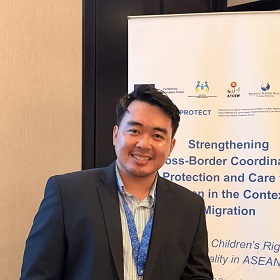
By Andrean Sangabie Sancaya
Recent remarks by Amien Rais, Chairman of the Shura Council (Majelis Syuro) of the Ummat Party, targeting Teddy Indra Wijaya, Cabinet Secretary of the Republic of Indonesia, including references to his sexual orientation, quickly circulated online and drew widespread reactions. The episode also prompted calls urging President Prabowo Subianto to distance himself and even remove Teddy from his current position. Not long after, the content was taken down, with the Indonesian Ministry of Communication and Digital Affairs stating that the video contained elements of hoaxes, defamation, and hate speech (Trikarinaputri, 2026).
In addition, Amien also raised legitimate concerns about whether Teddy, as Cabinet Secretary, holds too much influence, including over access to President Prabowo Subianto. He pointed to an example in which a coordinating ministry reportedly faced difficulties in securing a meeting with the President, allegedly due to Teddy’s role.
This is a valid issue worth discussing.
The conversation could have focused on evaluating Teddy’s authority, role, and performance. However, it appears that the focus has instead shifted away from governance and accountability toward Teddy’s sexual orientation. This is an example of ad hominem politics; instead of engaging with what someone does or the decisions they are involved in, the focus shifts to who they are (Zarefsky,2002).
This use of ad hominem ‘attack’ is not unique to Indonesia. In the United States, during his presidency, Barack Obama was repeatedly subjected to conspiracy theories questioning his birthplace and religion (Rutenberg, 2008). More recently, figures like Pete Buttigieg have faced attacks referencing their sexual orientation rather than their work (Gomez, 2019). In France, Emmanuel Macron has repeatedly been the target of rumors and personal insinuations about his private life (Vilmer, 2019). These narratives circulate widely not because they are relevant, but because they are provocative. The result, again, is distraction.
And if we are being honest, this kind of political tactic works, especially if the goal is to generate attention and reaction, including from President Prabowo, who is in a difficult position. Teddy is known as one of the President’s trusted aides, and how he is perceived by the public can place pressure on the President to distance himself or reconsider his position. Whether the claim is true or not, it can still influence public perceptions of the President’s leadership.
Keeping Teddy risks losing support from those who buy into the narrative that his perceived sexual orientation makes him unsuitable for a role close to the President. It may also fuel further speculation about his personal closeness to the President, which could extend to assumptions about the President’s own views on homosexuality or even unfounded speculation about his personal life. Removing him, however, risks validating that narrative while also resulting in the loss of a trusted aide. Either way, the conversation shifts away from Amien’s other concern about Teddy’s role and performance and becomes driven by perception, where decisions risk being interpreted through the lens of sexual orientation
Beyond its role as a political strategy, Amien Rais’ remarks have also sparked broader conversations about sexual orientation in Indonesia’s political space. Ideally, this should lead to a more fundamental question: does it matter? Is sexual orientation a relevant factor in assessing someone’s ability to serve in public office?
Based on the reaction, it appears that it does. The response from the Ministry of Human Rights indicated that Amien’s remarks about Teddy’s sexual orientation may have gone beyond freedom of expression and entered the realm of potential human rights violations (Safitri, 2026). However, the framing of this concern seems to focus primarily on the harm caused by publicly labeling someone as gay and the potential damage to their image, rather than addressing a deeper issue: that decisions about someone’s role or position should not be influenced by their sexual orientation in the first place.
This leads to wider social consequences. It reinforces the stigma that already exists. In Indonesia, where acceptance and protection for LGBTQ individuals remain limited, this kind of rhetoric does not remain confined to politics. It spills over into society. It signals that identity can be used as a tool to discredit someone, and that signal does not remain isolated. It shapes how people are treated beyond the political arena.
In addition, this incident may have a direct impact on Teddy’s well-being. Indonesia is not the most protective environment for LGBTQ individuals, and Teddy comes from a military background. The military is an institution where there has been a case of a soldier being tortured to death after being accused of being homosexual by fellow soldiers (Schanz, 2025). This context cannot be ignored, as it highlights the potential risks associated with such allegations. Once attached to a person, these labels rarely disappear. Regardless of their accuracy, they can shape how an individual is perceived over time. As a result, Teddy’s sexuality may become a persistent subject of public discussion, with little he can do to fully dispel the perception, even if he denies it or later marries a woman.
The circulation of videos on social media analyzing Teddy’s day-to-day behavior and attempting to link it to his sexual orientation further reinforces this narrative. People dissect his gestures, speech, and mannerisms to support a particular claim. This kind of content risks encouraging public ridicule and may lead to bullying. It also creates another problem: generalization, particularly the tendency to assign certain attributes or behaviors to LGBTQ individuals as a whole.
More broadly, the LGBTQ community in Indonesia may end up bearing the consequences. Behaviors that are loosely or stereotypically associated with being gay can begin to influence how individuals are perceived (Gee, 2024). In the wake of this viral incident, there is a risk that people will scrutinize perceived “heterosexual” traits more closely, sometimes valuing them over a person’s actual competence and merit, even though such traits do not reliably indicate sexual orientation. Visible characteristics often become the first basis for assumptions, and sometimes even for attacks. This reinforces harmful stereotypes and adds another layer to the discrimination that many LGBTQ individuals already face in Indonesia. Taken together, these impacts go beyond one individual case. They point to a broader shift in how public discourse is shaped and the risks that come with it.
There are many valid reasons to question government decisions. That is part of democracy. But when criticism turns into personal attacks, it shifts attention away from performance and policy and toward perception. It places leaders in difficult positions, reinforces stigma, and normalizes shallow public debate.
That is the cost
Andrean Sangabie Sancaya is a human trafficking and migration expert based in Jakarta, Indonesia. He holds degrees in Law and Humanitarian Action and currently works for an International Governmental Organization on issues related to human trafficking and migrant smuggling in Southeast Asia.
| Comments in Chronological order (0 total comments) | |
| Report Abuse |
| Contact Us | About Us | Donate | Terms & Conditions |


|
All Rights Reserved. Copyright 2002 - 2026