| Thu. May 28, 2026 |
 |
|
||
|
||||
| ||||


By Dr. Bruce Mabley
Unexpected intrusions of beauty. This is what life is. Saul Bellow, Herzog
In the fall of 2012, another Rubicon awaited me at the Olive Tree Syrian refugee camp in Atme just across the Turkish border in Syria. Crossing the border checkpoint from Turkey to Syria was not difficult, but the effort was pregnant with meaning. My diplomatic accreditation did not extend beyond the Turkish, Georgian and Azeri borders. I had no standing in Syria. It was the day, some say, I became a rogue diplomat.
It was a sunny October morning in Antakya when my two Syrian opposition operatives showed up at the Savon Hotel. I came into contact with both of them through a Syrian relief organization working along the border. It was run under the auspices of one of the former Syrian republican politician’s sons.
The first was Doctor Samatar. No one told me his full name, but for some reason, he was along for the ride. Later, he incurred the wrath of opposition operatives for some reason unknown to me. The second was a Syrian national and activist from Italy. All three of us packed into a white pickup and headed at breakneck speed to the border.
For numerous months, my professional life revolved around the Turkish–Syrian border, interviewing fighters, activists and Turkish and international journalists. The Italian provided his worth as a key contact, although he was not as valuable as Omar. He knew Omar but then again, everyone seemed to know Omar. He knew him though, and he was also familiar with the work of an Italian priest and cooperant in the border areas called Father Calzone. His reputation as a supporter of the Syrian opposition was well-known, as mine had become. He hung out at the Maritime Hotel near the centre of town where he had a room.
The Maritime Hotel, near the Orontes River that flowed through the centre of the city of Antakya, was the nerve centre of the Syrian rebellion in Antakya. Free Syrian operatives, lone wolf activists freshly arrived from Syria and political party and factional leaders of the Muslim Brotherhood and others all ended up at the Maritime at some point during their stay in Antakya to drink coffee, have a meal or rest up for their next foray across the border.
That link with the two Italians and Maritime Hotel set my mind at ease and I felt fully secure as we approached the border, navigating the bumpy road with our Toyota pickup. It had been a hot, dry October and as I looked at the road behind, large clouds of dust prevented me from seeing the ever-fainter outline of the small city of Antakya that we just left.
Upon arrival at the Turkish border post, the two Syrians called the Turkish post commander on their cell phone. A young sleepy conscript shuffled down the hill to check our papers from the makeshift military encampment atop a treeless hill. As we entered into the Atme camp, which straddled the Turkish military border post, my Syrian activist handlers pointed to several missile batteries pointed towards Syria and an immobile tank. Were they there to protect the arriving Atme camp dwellers or was it just for show?
Camp officials claimed there were more than 2,000 families at Atme, most of whom had no tents. They pointed to new arrivals from Hama and Homs the night before, who were camped out under the olive trees. The camp worked according to seniority, with families given priority based on time of arrival and projected length of stay at the camp. The ones who arrived first and stayed the longest had priority in obtaining a tent. Tents were rare, far too rare – such was my immediate observation. Most women and children were camped out under the olive trees, which could only afford a rudimentary form of cover.
Despite using rugs for cover, when it rained, the camp was transformed into a muddy quagmire. Makeshift outdoor toilets added to the sanitation problem. Despite this, the camp appeared well-organized by the Syrians themselves. Living outdoors was sometimes perilous and camp officials indicated that scorpion and snake bites were common amongst young children. Some youngsters had even died as a result.
Living conditions at the Atme camp were very poor. Happily, camp officials had just announced that 500 new families would be allowed to cross the Turkish border and enter the Turkish camps soon. At that time, the Syrians could not cross over into Turkey without the host country’s permission. The camp looked overcrowded and the territory reserved for further camp space looked barren and exposed to the elements. Although October had been unusually clement, winter was coming. The people in the camp had to know this too.
Upon crossing the border, we stopped at the FSA camp commander’s booth where he summoned my honor guard, which consisted of one young boy around twelve years old on my left and an old man of about seventy years on my right. They were both carrying Kalashnikovs. At the end of my camp tour, my elderly companion fell down and cried at the sight of his sister who he thought had been killed in the conflict. He cried like a child embracing his sister while giving thanks to Allah. A light at the end of a dark tunnel or a brief stop en route for hell?
The weather was hot for October. As we made our way past the olive trees, I turned my head to the left only to see a woman holding a small baby perched on a rather large mound of sand. She had what looked to be a paper umbrella in her hand, ostensibly to protect the baby from the sun’s rays. I noticed that the camp dwellers refused to look at the woman or the mound of sand throughout my entire visit. I thought this to be curious indeed.
Both the camp commander and the Syrian activists repeated that any Syrian aircraft approaching within eight kilometers would be shot down. Activists pointed inside Syria and claimed that the nearest government troops were sixty kilometers away. Despite this, three times during the visit, the word ‘tayara’ (airplane in Arabic) was pronounced. In each case, this led to a brief panic until it was determined there was no plane, only a kite flown by the camp children who accompanied us on our visit. In the last instance, a young boy mistook a bird for a plane.
They had clearly been traumatized by the Syrian government’s aerial bombardment that included dropping barrel bombs on refugee camps. I saw rugs draped over olive trees where many families were living outdoors, hence the Atme camp became known as the Olive Tree camp. Fleeing refugees had wisely taken their carpets with them. In Atme, they became their only protection from the elements – rain, wind and cold nights. Bashar had displaced and killed his own people and it was this thought that steeled my resolve to fight harder for the rebel cause.
The Turkish military said they had established a buffer zone at Atme to repel any Syrian attacks or provocation and to protect arriving refugees. The refugee overflow, United Nations paralysis and border provocation by Syrian forces had left the Turks with little choice but to attempt to establish a buffer zone themselves, given the lamentable state of world opinion. It is important to remember that the Turkish request for a no-fly zone to protect the refugees was refused by Western powers.
Although 500 families left Atme for camps in Turkey on the weekend, people continue to arrive from battlefronts inside Syria. The conditions in Atme testify to a lack of sanitation while roughly half of the refugees had no tents. Food and clean drinking water were at a premium. Camp residents had been traumatized by the regime’s ruthless air campaign.
Despite the scarcity of food, medical assistance and shelter, the FSA camp commander appeared to have an established plan of action and protocols in place to make the best of a bad situation. Inside the camp, the Syrians organized the camp themselves despite competition for scarce resources. I was not fully convinced that the Turks would shoot down any potential aerial attack on the camp. The old artillery pieces on the hill looked more like they were issued for the American Civil War rather than any modern anti-missile battery. It was reassuring, at least, as a symbol.
The conclusions of my visit were stark – there was a burgeoning mass of refugees, delays, and bad faith and ideology had put the brakes on aid to the needy with the collaboration and connivance of the United Nations High Commissioner for Refugees (UNHCR). The Turkish officials desired to control the refugee operations and were always rightly suspicious of the West and its panoply of ‘friendly’ NGOs. During my camp visit, I observed that only Islamist organizations were delivering assistance to the arriving refugees with Turkish permission.
The Olive Tree camp would last in my memory as an open wound that flares up periodically. It was testimony to Western stupidity and apathy. Access to the camp was tightly controlled by the Turks and humanitarian aid was limited to one Turkish Islamist NGO. Luckily, Hussein Oruç was a good and talented man capable of coming to the aid of the Syrians fleeing oppression.
Upon leaving the camp, I looked back at the mound where the woman and the baby had been several hours later. They had not budged. Were they dead? Why were they not being assisted? Had the elderly woman gone crazy? Impossible to tell, yet I was unable to rid my memory of that image. Even now, it comes to the fore from time to time, in times of grim depression or despair. I will never know the truth.
The same cannot be said for organizations like the UNHCR and their political brethren. In this, the Turks gauged correctly. They brought aid but they also brought their apathy, political maneuvering and in the end, sometimes created more harm than good. Access to the camp was controlled by the Turks, who counted mostly on their main NGO operated by Hussein Oruç in Istanbul. They were assisting the Syrians who are traumatized, sounding tayara alerts and enduring hardship. They did not need more politics. What a human disgrace! Shadows of what was to come in Palestine and Gaza.
It was a war on the human species, not just on Arabs and Muslims. The UNHCR political buck-passing and Western apathy meant that Islamists would form the main effective opposition to Bashar. For the Turks, this was not a bad outcome, all things considered.
Returning from Ankara, I wrote my report which had the effect of ten sticks of dynamite in the Foreign Ministry. The report was also read by the Five Eyes intelligence network thereby enhancing its impact and thrusting us into the limelight despite the desired monotony and mediocrity of shiftless legions of Canadian Foreign Ministry bureaucrats and senior management. Conditions were horrendous in the camps and only the Islamic agencies were helping. The report of this humanitarian nightmare in Syria was the first to reach the Five Eyes intelligence community. It rocked the boat and I believed, for the first time, that assistance might arrive. It would arrive slowly.
Most of the aid, when it arrived, was too little, too late and did not contain any arms for self-defence. At HQ, despite early positive reactions from the Minister’s office, the hand-wringing, do-nothing Foreign Service bureaucracy quashed any hope of sustainable humanitarian assistance. Western arming of the democratic opposition would be a bridge too far. Many innocent Syrians would pay for this lack of international vision and inaction.
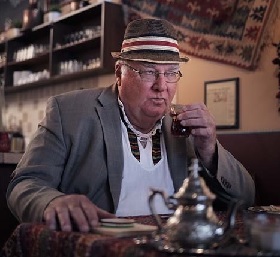
Dr. Bruce Mabley is an ex Canadian diplomat. During the Arab spring in Syria, he took an active part in advising and liaising with Syrian opposition factions. Mabley is the author of Vectors of Freedom and the Diary of a Rogue Diplomat. A new title 'Le destin insolite d'un diplomate errant' will appear this year.
| Comments in Chronological order (0 total comments) | |
| Report Abuse |
| Contact Us | About Us | Donate | Terms & Conditions |


|
All Rights Reserved. Copyright 2002 - 2026