| Thu. June 18, 2026 |
 |
|
||
|
||||
| ||||


By Jamie Swords-Kerti
Since the development of organised political authority, leadership has oscillated between moral idealism and pragmatic calculation (Machiavelli, 1532; Sleat, 2014). In nineteenth-century Europe, Realpolitik emerged as a pragmatic response to political instability and interstate rivalry, prioritising empirical realities over ideological abstractions (Wheler, 1970; Bew, 2016). Otto von Bismarck institutionalised this approach as a form of statecraft, employing war, alliances and diplomacy to achieve German unification while maintaining European stability (Kissinger, 1994; Caquet, 2024).
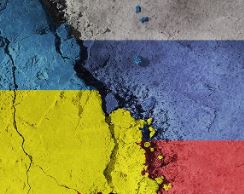
The European Union’s (EU) response to Russia-Ukraine can present a similar approach. While the European Council (2022) has articulated commitment to sovereignty, democracy and international law, its response has been strained by security concerns, economic strength and escalation risks (Abelow, 2022; Bukhari et al., 2024). This essay will display how the EU’s crisis management may reflect the continued legacy of Bismarckian Realpolitik.
Bismarckian Realpolitik
Often compared to Ludwig von Rochau’s (1853) theoretical framework, Bismarckian Realpolitik has been defined as a pragmatic approach to statecraft that prioritised practical considerations and national interest over ethical principles (Pflanze, 1958; Kelly, 2017). According to Rathbun (2018), Bismarck grounded his political decisions in material power and strategic calculation. This approach has been reflected in initiatives such as the Congress of Berlin in 1878 and the League of Three Emperors, which prioritised European stability and German security over moral objectives (Holborn, 1960; Kosmach, 2025).
This approach offered advantages at both national and continental levels. Langer (1977) argues that by placing Germany at the centre of European diplomacy, Bismarck improved Germany’s security and ability to manage hostile disputes (Steinberg, 2011). Simultaneously, prioritising predictability over moral concerns reduced the risk of major war, supporting wider European stability (Mearsheimer, 2018).
Although Kuçi (2020) argued that Bismarck’s foreign policy depended heavily on his personal leadership, meaning that the alliances Bismarck formulated lacked mechanisms to mediate hostilities in his absence. Equally, Gardner (2016) highlighted that after his dismissal in 1890 key elements of his system, such as the Reinsurance Treaty with Russia, collapsed in his absence leading to instability of power within Europe. Together, these examples demonstrate the main disadvantages of Bismarckian Realpolitik. It relied heavily on a single individual, and after his discharge, the carefully calculated system became unstable, potentially contributing to the conditions that eventually led to the outbreak of World War One (Gardner, 2016; Kuçi, 2020).
Understanding Bismarck’s diplomatic legacy is key to evaluating the EU’s response to the Russia-Ukraine conflict. Although, the Union was founded to prevent another European war through values-based cooperation (Kølvraa, 2016), assessing whether its foundations reflect Bismarckian Realpolitik highlights the ongoing tension between stated principles and strategic necessity during crises.
EU’s Self-Image vs Strategic Reality
The EU’s institutional identity is constructed around moral commitments rather than strategic pragmatism (Bicchi et al., 2024). The Treaty on European Union established five foundational objectives: peace, democracy, human rights, economic progress and solidarity among member states (Blanke & Mangiameli, 2013).
This value-based structure emerged from Europe’s collective trauma following World War Two, where extreme nationalist competition led to continental destruction (Della Sala, 2010; Nawaz, 2025). The European Commission (2025) reaffirmed its commitment to spreading democratic values and preventing conflict through cooperative governance. This demonstrates that the EU explicitly defines itself in opposition to nationalist self-interest and power politics that underpinned Bismarck’s statecraft.
However, Nitoiu (2025) argues the conflict has revealed tension between stated principles and practise. Powerful EU economies, including France, Spain and the Netherlands continue sourcing Russian Liquefied Natural Gas (LNG); while Austria, Hungary and Slovakia import Russian crude oil and gas through pipelines (Oravcová, 2023; Raghunandan, 2025). Despite the Council’s 2028 phase-out pledge, some EU states continue to import Russian fossil fuels to maintain economic stability (Melekh et al., 2025), which may directly fund Russian military production against Ukraine (Gars et al., 2025). Hungarian and Slovakian officials have even opposed EU energy policy, claiming it undermines national sovereignty (Quillen, 2025). This suggests that when economic stability conflicts with stated values, EU states can revert to pragmatic self-interest, effectively utilising Realpolitik statecraft that it theoretically opposes.
EU’s Military Aid
However, despite these economic compromises, the EU has provided substantial military assistance to Ukraine (Haesebrouck, 2024). The EU has committed €69.3 billion in aid, with €63.2 billion sourced directly from member states budgets, including military training, ammunition and joint security commitments (European Commission, 2022; Eardley & Edington, 2025). Scholars highlight that this support reflects a moral obligation to uphold Ukrainian sovereignty and international law, while reducing the risk of nuclear escalation by enabling Ukrainian self-defence, rather than direct intervention from the West (Anastazievsky, 2024; Braun, 2025).
Conversely, Johansson- Nogués & Leso (2025) argued that the EU’s defence support reflected a desire to preserve power and security rather than normative ideals. Håkansson (2025) explained that the Russian invasion may have exposed EU vulnerabilities in migration, energy supply, dependence on the United States and internal divisions. In response, the EU provided considerable military aid and imposed sanctions to contain Russian influence in Eastern Europe while preserving Western power (Johansson- Nogués & Leso, 2025). This can mirror Bismarck’s strategic alliances, such as the League of the Three Emperors (1873) and the Dual Alliance (1879), which aimed to prevent French retaliation and preserve Germany's geopolitical influence after the Franco-Prussian War (Pflanze, 1958).
Limitations & Conclusion
While this essay has identified several parallels between Bismarckian statecraft and the EU’s response to the ongoing war, such direct comparisons can inherit limitations. Unlike Bismarck’s nationalist and power-oriented approach, most contemporary European states have been shaped by Enlightement political philosophy; which emphasise reason, individualism and scepticism towards traditional authority (Zafirovski, 2010; Steinbach, 2025). Scholars maintain that the Union reflects this intellectual legacy through its normative principles and influence from Kant’s ideas of perpetual peace (Reit & Klaver, 2024).
The EU was originally established to demonstrate political unification and to serve as a global symbol of peace (Della Salla, 2010; Kølvraa, 2016). Similarly, Bismarck achieved German unification and prioritised European stability within his foreign policy (Kissinger, 1994; Gardner, 2016). Despite their political ideological differences, the significance of this comparison lies in the similarities between the EU’s contemporary approach to the conflict and the diplomatic strategies employed by Bismarck during his political career. This suggests that elements of his legacy continue to shape European diplomacy even among actors who formally reject his philosophy (European Commission, 2025).
While the EU is not a direct continuation of Bismarckian diplomacy, this essay aimed to show how there may be elements of his legacy that can be traced in the Union's response to the Russia-Ukraine war; such as strategic pragmatism, balancing internal divisions and managing external threats. By contrasting stated ideals with practical actions in economic, energy and military policy, it highlighted the potential tension between ethical rhetoric and strategic interest.
Jamie Swords-Kerti is an undergraduate student at the University of Worcester studying Psychology with Politics whose research interests include Geopolitics, diplomatic history and international relations.
References
Abelow, B. (2022). How the West brought war to Ukraine: Understanding how U.S. and NATO policies led to the crisis. Siland Press.
Anastazievsky, S. (2024). What We Owe to Ukrainians: A Moral Perspective on Nuclear Coercion and Military Intervention. Ethics & International Affairs, 38(1), 31–53. https://10.1017/S089267942400011X
Bew, J. (2016). Realpolitik: a history. Oxford University Press.
Bicchi, F., Maurer, H., & Raube, K. (2024). Maturation by practice: Shaping the EU’s international identity in the absence of formal institutional change. European Security, 33(3), 364–382. https://doi.org/10.1080/09662839.2024.2383405
Blanke, H.-J., & Mangiameli, S. (2013). The treaty on European union (Teu): A commentary. Springer.
Braun, C. N. (2025). Weapons for Ukraine as force-short-of-war. International Affairs, 101(1), 291–308. https://doi.org/10.1093/ia/iiae285
Bukhari, S. R. H., Khan, A. U., Noreen, S., Khan, M. T. U., Khan, M. N., & Haq, M. I. U. (2024). Ukraine and Russia: A historical analysis of geopolitical dynamics, national identity, and conflict escalation leading to the present-day crisis. Kurdish Studies, 12(2), 5803-5824.
Caquet, P. E. (2024). The Invention of Realpolitik, 1848–1871. Springer Nature.
Della Sala, V. (2010). Political myth, mythology and the European union. JCMS: Journal of Common Market Studies, 48(1), 1–19. https://doi.org/10.1111/j.1468-5965.2009.02039.x
Eardley, N., & Edgington, T. (2025). How much has the US given to Ukraine? BBC. https://www.bbc.com/news/articles/crew8y7pwd5o
European Council. (2025). Council and Parliament strike a deal on rules to phase out Russian gas imports for an energy secure and independent Europe. Consilium. https://www.consilium.europa.eu/en/press/press-releases/2025/12/03/council-and-parliament-strike-a-deal-on-rules-to-phase-out-russian-gas-imports-for-an-energy-secure-and-independent-europe/
European Council. (2022). EU military support for Ukraine. Consilium. https://www.consilium.europa.eu/en/policies/military-support-ukraine/
European Commission. (2025). 2025 State of the Union Address by President von der Leyen. European Commission - European Commission. https://ec.europa.eu/commission/presscorner/detail/ov/SPEECH_25_2053
Gardner, H. (2016). The failure to prevent World War I. In The Ashgate Research Companion to War. Routledge.
Haesebrouck, T. (2024). Eu member state support to Ukraine. Foreign Policy Analysis, 20(2), orae005. https://doi.org/10.1093/fpa/orae005
Håkansson, C. (2025). Understanding the European Union’s Response to the Russian war on Ukraine: The role of the European External Action Service. Defence Studies, 25(4), 845–863. https://doi.org/10.1080/14702436.2025.2562978
Holborn, H. (1960). Bismarck’s Realpolitik. Journal of the History of Ideas, 21(1), 84. https://doi.org/10.2307/2708000
Johansson-Nogués, E., & Leso, F. (2025). Geopolitical EU? The EU’s wartime assistance to Ukraine. JCMS: Journal of Common Market Studies, 63(1), 127–142. https://doi.org/10.1111/jcms.13613
Kelly, D. (2018). August Ludwig von Rochau and Realpolitik as historical political theory. Global Intellectual History, 3(3), 301–330. https://doi.org/10.1080/23801883.2017.1387331
Kissinger, H. A. (1968). The White Revolutionary: Reflections on Bismarck. Daedalus, 97(3), 888–924. http://www.jstor.org/stable/20023844
Kissinger, H. (1994). Diplomacy. Simon & Schuster.
Kølvraa, C. (2016). European fantasies: On the EU’s political myths and the affective potential of utopian imaginaries for European identity. JCMS: Journal of Common Market Studies, 54(1), 169–184. https://doi.org/10.1111/jcms.12325
Kosmach, A. E. (2025). Bismarck’s foreign policy from the formation of the German empire to the 1878 congress of berlin as reflected in Russian public opinion. Sprin Journal of Arts, Humanities and Social Sciences, 4(2), 11–22. https://doi.org/10.55559/sjahss.v4i2.480
Kuçi, G. (2020). Civilization, Ideology and Geopolitics after the Fall of Bismarck with World War I Actors, USA and Russia. JUSTICIA–International Journal of Legal Sciences, 8(13-14), 101-114.
Langer, W. L. (1977). European alliances and alignments 1871-1890. Greenwood P.
Machiavelli, N. (1532). The prince. Antonio Blado d’Asola.
Mearsheimer, J. J. (2018). Back to the future: Instability in Europe after the Cold War. In National and International Security. Routledge.
Nawaz, A. (2025). World War II: A global conflict shaped by ideology, nationalism, and geopolitical tensions. International Journal of Multidisciplinary Trends, 7(1), 113–123. https://doi.org/10.22271/multi.2025.v7.i1b.615
Nitoiu, C. (2025). (Un) avoidable Conflict in Ukraine: The Ideal Self and Fault Lines in Europe and Russia. Bloomsbury Publishing USA.
Oravcová, V. (2023). Energy Without Russia. The Consequences of the Ukraine war and the EU Sanctions on the Energy Sector in Europe, Country report Slovakia.
Pflanze, O. (1958). Bismarck’s Realpolitik. The Review of Politics, 20(4), 492–514.
Quillen, S. (2025). ‘Closing the tap’: EU agrees on deal to end Russian gas imports by 2027. Al Jazeera., https://www.aljazeera.com/news/2025/12/3/eu-agrees-deal-to-end-russian-gas-purchases-by-2027
Raghunandan, V. (2025, December 11). Monthly analysis of Russian fossil fuel exports and sanctions. Centre for Research on Energy and Clean Air. https://energyandcleanair.org/november-2025-monthly-analysis-of-russian-fossil-fuel-exports-and-sanctions/
Rathbun, B. (2018). The rarity of realpolitik: What Bismarck’s rationality reveals about international politics. International Security, 43(1), 7–55. https://doi.org/10.1162/isec_a_00323
Riet, J. van de, & Klaver, F. (2024). The EU and Russian aggression: Perspectives from Kant, Hobbes, and Machiavelli. European Papers - A Journal on Law and Integration, 8(3), 1523–1537. https://doi.org/10.15166/2499-8249/728
Rochau, A. L. von. (1969). Foundations of Realpolitik (C. C. Bailey Trans.). New York, NY: Gordon Press. (Original work published 1853)
Sleat, M. (2014). Legitimacy in realist thought: Between moralism and realpolitik. Political Theory, 42(3), 314–337. https://doi.org/10.1177/0090591714522250
Steinbach, A. (2025). The European council and council of ministers. In A. Steinbach, EU Law and Economics, pp. (159–164). Oxford University PressOxford. https://doi.org/10.1093/9780198920915.003.0015
Steinberg, J. (2011). Bismarck: A life. Oxford University Press.
Wehler, H.-U. (1970). Bismarck’s Imperialism 1862-1890. Past & Present, 48, 119–155. http://www.jstor.org/stable/650484
Zafirovski, M. (2010). The enlightenment and its effects on modern society. Springer Science & Business Media.
| Comments in Chronological order (0 total comments) | |
| Report Abuse |
| Contact Us | About Us | Donate | Terms & Conditions |


|
All Rights Reserved. Copyright 2002 - 2026