| Sun. August 16, 2026 |
 |
|
||
|
||||
| ||||


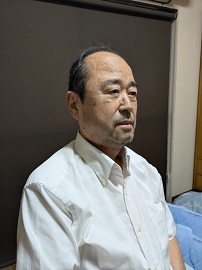
By Fumihiko Takeda
This essay does not endorse nuclear war or recommend the use of nuclear weapons. Its purpose is precisely the opposite. It considers how war can be prevented, particularly wars in which powerful states unilaterally sacrifice weaker ones.
Nuclear weapons are the most inhumane weapons humanity has ever created. Yet, because their destructive power is so immense, they possess the ability to deter war, limit the escalation of a war that has already begun, and, in some circumstances, compel the abandonment of further warfare.
Herein lies the tragic paradox of nuclear weapons.
An attitude that speaks only of the tragedy of nuclear weapons while refusing to discuss their actual political and military functions fails to grasp their full reality. Conversely, an attitude that speaks only of deterrence while disregarding the catastrophic human consequences of nuclear use is equally mistaken.
We must confront both realities simultaneously.
THE LOGICAL FRACTURE WITHIN JAPANESE GOVERNMENT POLICY
The Japanese government is substantially increasing its defence expenditure on the grounds that China, Russia, North Korea, or another state may launch a military attack against Japan. It is also taking steps to place Ministry of Defense and Self-Defense Forces command facilities underground and to strengthen and disperse military installations so that they can survive missile attacks.
These policies presuppose that war may occur.
If there were no possibility that Japan could be attacked, the Japan–US Security Treaty, enormous defence budgets, and the underground construction of command centres would all be unnecessary. A state prepares its defences for the worst precisely because an attack is possible.
Yet the same Japanese government adopts an entirely different premise when dealing with nuclear power plants.
Japan’s new regulatory standards for nuclear power plants address earthquakes, tsunamis, fires, severe accidents, and certain forms of terrorism. They do not, however, require nuclear power plants to withstand full-scale military attacks by another state, including missile strikes, aerial bombing, or occupation by military forces.
Nevertheless, the government describes reactors that conform to these standards as nuclear power plants “whose safety has been confirmed” and proceeds with their restart.
This is not an accurate use of the term “confirmed safety.”
The government should state instead:
“The plant has been found to conform to the new regulatory standards, within a framework that excludes full-scale military attacks by another state.”
In defence policy, Japan assumes the worst possibility—that a potential adversary may attack the country. In nuclear energy policy, it excludes an attack by the same potential adversary from its safety assessment.
The same state is therefore applying contradictory assumptions to the same possibility of war, depending upon the policy area involved.
This is not merely a defect in administrative policy. It is a fundamental logical fracture within Japan’s national security policy.
INTERNATIONAL LAW CANNOT PHYSICALLY PROTECT A NUCLEAR POWER PLANT
Nuclear power plants receive special protection under Article 56 of Additional Protocol I to the Geneva Conventions. They must not be attacked when the resulting release of dangerous forces may cause severe losses among the civilian population.
However, the claim that nuclear power plants are safe because international law prohibits attacks against them does not constitute a national security policy.
International law also prohibits wars of aggression. It prohibits armed invasions across national borders and attacks upon civilians. Yet aggression, invasion, and attacks on civilians continue to occur.
If a legal prohibition could protect nuclear power plants, the same kind of prohibition should be sufficient to prevent war itself. If that were true, military alliances and defence forces would no longer be necessary.
National security begins by considering the possibility that an adversary may refuse to obey laws and agreements. A rule declaring that nuclear power plants must not be attacked has great importance as an international political norm, but it cannot intercept a missile or physically protect a nuclear installation.
NUCLEAR POWER PLANTS ARE IMMOBILE AND ULTIMATELY INDEFENSIBLE VULNERABILITIES
A nuclear power plant is enormous, its location is publicly known, and it can neither move nor conceal itself.
A reactor containment structure is far stronger than an ordinary building. Yet an attacker does not necessarily have to penetrate the reactor vessel itself. An attack on external power lines, substations, cooling-water intakes, emergency generators, pumps, pipes, control systems, or spent-fuel storage facilities could create a serious nuclear emergency.
Even after a reactor has been shut down, its fuel continues to generate decay heat. It therefore requires electricity and cooling for a prolonged period.
Shutting down a reactor does not make it immediately safe.
Spent nuclear fuel also remains after a nuclear power plant has been closed. Eliminating the danger therefore requires more than simply stopping reactor operations. The fuel must be cooled for an extended period, transferred to a safer and more passive form of storage, and ultimately placed under secure long-term management.
The experience of the Zaporizhzhia Nuclear Power Plant has made this danger unmistakable.
An aggressor does not need to destroy a reactor. By occupying the plant, controlling its personnel, interrupting its external power supply, and conducting military operations around it, armed forces can turn a nuclear power plant into a national hostage.
A nuclear power plant is therefore not merely an electricity-generating facility. In wartime, it may become an enormous fixed target presented to the enemy.
THE TRUE COST OF NUCLEAR POWER HAS NOT BEEN CALCULATED
The economic cost of nuclear power is ordinarily calculated in terms of construction, fuel, operation, and maintenance. Yet essential costs remain outside that calculation.
The total cost should include decommissioning, the long-term management and final disposal of spent nuclear fuel, severe accidents, decontamination, evacuation, and the possible loss of national territory.
It should also include wartime air defence, physical security, protection of transmission systems, emergency power, military deployment, rescue operations, and post-attack reconstruction.
If interceptor missiles and Self-Defense Forces units are required to protect nuclear power plants, those expenses are part of the national security cost of nuclear-generated electricity.
In Japan, however, nuclear power is treated by the Ministry of Economy, Trade and Industry as a contribution to “energy security,” while the military costs and dangers created by nuclear power plants are transferred to the Ministry of Defense, the police, local governments, and ultimately the public.
The contribution of nuclear power to energy security is counted, while the burden it imposes upon national security is separated from the cost of nuclear generation.
This cannot be regarded as an accurate calculation of the true cost of nuclear power.
DOES PROTECTING THE COMMANDERS WHILE LEAVING THE POPULATION EXPOSED CONSTITUTE NATIONAL DEFENCE?
Placing military command centres underground is necessary. If the command structure were destroyed in the initial attack, the country could no longer direct air defence, retaliation, evacuation, or rescue operations.
Yet, if the purpose of national security is to protect the people and national territory, can a policy truly be called national defence when it places commanders underground while leaving numerous fixed radioactive targets within civilian living areas?
If a facility cannot be fully protected during war and its destruction could inflict fatal damage upon the nation, the first question should be whether the country can reduce its dependence upon that facility.
A policy that increases the number of vulnerabilities requiring protection and then purchases additional conventional weapons to defend them reverses the proper relationship between ends and means.
Japan should gradually reduce its dependence on nuclear power, diversify its energy sources and electricity networks, and diminish the long-term danger posed by spent nuclear fuel.
NUCLEAR WEAPONS HAVE CHANGED THE ARITHMETIC OF MILITARY POWER
In the age of conventional warfare, a state possessing ten times the population, economic strength, and military forces of a smaller country generally enjoyed an overwhelming advantage. A great power could sometimes defeat and occupy a weaker state while suffering comparatively limited damage itself.
Nuclear weapons fundamentally changed this calculation.
A nuclear balance of one to ten does not necessarily produce a political balance of one to ten. If a smaller state possesses a credible ability to inflict irreparable damage upon the principal cities and national command structure of a great power, the stronger state cannot attack it easily, even if it would ultimately prevail militarily.
The difference between the ability to destroy an adversary ten times and the ability to destroy it once is not equivalent to a ten-to-one difference in conventional military strength.
If even a single retaliatory strike could inflict unacceptable damage, the additional political value produced by nuclear superiority diminishes rapidly after a certain threshold has been reached.
Nuclear weapons give a smaller state a veto against a great power.
They do not make the smaller state completely equal. The great power may still employ economic sanctions, maritime pressure, political subversion, or limited military operations below the nuclear threshold.
Nevertheless, the destruction of the smaller state, overthrow of its government, and occupation of its territory can no longer be undertaken without the risk of an intolerable price.
In this sense, nuclear weapons have partially equalised a balance of power that could never have been equalised by conventional weapons alone.
THE WAR-DETERRENT POWER OF NUCLEAR WEAPONS
Nuclear weapons are not primarily weapons with which one completely defeats an adversary.
They are weapons that compel the adversary to recognise:
“Even if we attack and prevail, we ourselves will suffer damage that cannot be accepted.”
The actual use of nuclear weapons would produce a human catastrophe. Precisely because that catastrophe can be anticipated, their use is deterred, and full-scale war between nuclear-armed states is restrained.
The inhumanity of nuclear weapons and their deterrent effect are therefore not separate characteristics. Their inhumanity is the source of their deterrent power.
Nuclear deterrence is not perfect. It may fail through misperception, false warning, command failure, or miscalculation by political leaders.
However, recognising that deterrence can fail is not the same as claiming that it has no effect in international politics.
THE WAR-LIMITING AND WAR-TERMINATING POWER OF NUCLEAR WEAPONS
Nuclear weapons do more than deter the initial outbreak of war. They can also limit the escalation of a war that has already begun.
When nuclear-armed states approach direct conflict, the knowledge that an unrestricted war could destroy both sides creates pressure to limit targets, weapons, intervention, and escalation.
Nuclear weapons can also fundamentally alter a political leader’s decision whether to continue or terminate a war.
In conventional warfare, leaders may refuse to accept defeat and continue fighting for years while sacrificing soldiers and civilians.
Nuclear weapons confront them with a different choice:
“Will you end the war under the present conditions, or continue it while accepting the possible destruction of the state itself?”
Historians continue to debate whether the atomic bombings of Hiroshima and Nagasaki alone determined Japan’s surrender, and how greatly the Soviet Union’s entry into the war influenced that decision. It would therefore be an oversimplification to claim that the atomic bombs alone ended the Pacific War.
Nevertheless, it cannot reasonably be denied that the atomic bombings confronted Japan’s leadership with the possibility of repeated destruction on an entirely different scale and exerted a major influence upon the decision to terminate the war.
Nuclear weapons do not always end wars. Yet they possess a war-terminating power unlike that of any other weapon, because they fundamentally transform the calculation between the possible gains from continuing a war and the possible destruction that continuation may bring.
THE ARROGANCE OF GREAT POWERS DRIVES NUCLEAR PROLIFERATION
Nuclear-armed great powers demand that other countries refrain from obtaining nuclear weapons.
But what lesson will non-nuclear states learn if those same great powers use nuclear weapons as the background to military and political pressure, disregard international law, and attempt to change borders or governments by force?
They will not learn that surrendering nuclear weapons guarantees their security.
They will learn that a state without nuclear weapons must ultimately conform to the will of states that possess them.
There is no world government. Nor is there a compulsory international authority that will invariably prevent violations of international law and rescue every victimised state.
States possessing power can influence the meaning and application of political justice. States without power are frequently compelled to avoid defying them. It is dangerous to imagine that political justice exists in international affairs independently of power.
If a non-nuclear state refuses to remain subordinate to the intentions of nuclear-armed states, it is not irrational for it to seek the means to inflict unacceptable retaliatory damage upon them.
Indeed, aggression and nuclear intimidation by the great powers have become the most powerful advertisement for nuclear proliferation.
THE NEW NUCLEAR AGE
The term “Second Nuclear Age” has already been used to describe the period after the collapse of the US–Soviet bipolar order, in which multiple nuclear-armed states emerged in Asia, the Middle East, and elsewhere.
The coming nuclear age, however, may have an even deeper meaning.
It will not merely be an age in which the number of nuclear-armed states increases.
It may become an age in which nuclear weapons partially destroy an international order where great powers monopolise overwhelming force and determine the fate of weaker states.
Countries with a strong desire for independence, countries subjected to unjust pressure by great powers, and countries that no longer trust an ally’s nuclear umbrella may increasingly regard nuclear armament as the ultimate insurance for national survival.
As the number of nuclear-armed states increases, so will the danger of accidents, miscalculation, unauthorised use, and nuclear war. Such a world will not be bright or ideal. It will be a bleak and chilling world.
At the same time, however, it will become more difficult for a great power to attack a weaker state unilaterally, destroy its government, and decide its political future.
This development would represent both an increase in danger and an equalisation of power.
Nuclear weapons are not benevolent weapons that bring peace to humanity. They are weapons capable of destroying humanity. Yet because a great power cannot inflict that destruction upon another nuclear-armed state without risking its return upon itself, nuclear weapons can restrain the arrogance of the powerful.
Unless we recognise this paradox, speaking only of the tragedy of nuclear weapons will not stop nuclear proliferation.
If the nuclear-armed great powers genuinely wish to prevent proliferation, they must first stop using nuclear weapons as the background to intimidate, invade, and override the political will of weaker states.
THE CHOICE FACING JAPAN
Japan currently possesses no nuclear weapons and depends upon the United States for ultimate nuclear deterrence. At the same time, Japan maintains numerous nuclear reactors and large quantities of spent nuclear fuel within its territory.
Japan has therefore placed enormous fixed vulnerabilities within the country while entrusting the ultimate decision to deter attacks against those vulnerabilities to a foreign government.
If Japan is prepared to follow the strategic intentions of the United States and continue to rely upon the American nuclear umbrella, its present policy has a certain internal explanation.
If, however, Japan seeks genuine autonomy and wishes to survive as a state even under the worst possible conditions, its present policy must be reconsidered.
Japan must first reduce, in a planned and gradual manner, the indefensible fixed vulnerabilities represented by nuclear power plants.
At the same time, rather than attempting to compete quantitatively with great powers through unlimited expansion of conventional weaponry, Japan should openly debate whether it requires a minimum but credible retaliatory capability able to inflict unacceptable damage upon any state that attacks it.
What would be required is not a massive nuclear force designed for a first strike.
It would be a minimum nuclear deterrent restricted to retaliation: nuclear warheads, delivery systems, a survivable submarine-based capability, independent early-warning and intelligence systems, and command-and-control networks that could continue functioning after an attack.
This would not be nuclear armament for the purpose of waging war.
It would be deterrence intended to prevent war from beginning, prevent nuclear weapons from being used, and protect Japan’s political independence from nuclear-armed great powers.
Such a choice would, of course, involve extraordinarily serious questions: the Nuclear Non-Proliferation Treaty, relations with the United States, possible economic sanctions, reactions from neighbouring countries, accidental or unauthorised use, and the management and control of nuclear weapons.
That is precisely why the discussion itself must not be prohibited.
The argument that “nuclear weapons are tragic and therefore must not be discussed” could be sustained in a world without nuclear weapons. It cannot be sustained in a world where Japan is surrounded by several nuclear-armed states and where the final foundation of Japan’s security already depends upon American nuclear weapons.
Japan is not a country unrelated to nuclear weapons. It merely depends upon a nuclear deterrent whose ultimate use is decided by another country rather than by Japan itself.
CONCLUSION
If war cannot occur, the Japan–US Security Treaty, enormous defence budgets, and underground military command centres are unnecessary.
If war may occur, the same possibility must be applied consistently to nuclear energy policy.
It is logically indefensible to assume the worst in defence policy while excluding the same worst-case scenario from nuclear power regulation.
If nuclear power plants cannot withstand full-scale military attacks by another state, and if there is no way to guarantee the interception of every such attack, they must be recognised not merely as contributors to energy security but as potentially fatal vulnerabilities in national security.
In a world where nuclear weapons exist, a non-nuclear state cannot easily remain entirely independent of the intentions of nuclear-armed powers.
Japan must decide whether it will continue to depend upon the nuclear umbrella of another state, or whether it will reduce its indefensible nuclear power vulnerabilities and establish its own minimum retaliatory deterrent in order to secure genuine national autonomy.
This is not a question asked by those who desire nuclear war.
It is an unavoidable question for those who seek to prevent nuclear war, prevent nuclear weapons from being used, and ensure that Japan is never again sacrificed according to the will of a great power.
Fumihiko Takeda is the founder and Representative of the Lincoln Club, an independent political and policy research organization that he established in Japan on November 19, 1993. The Lincoln Club is his own organization and is not affiliated with, or a branch of, any organization in the United States.
In 1974, he founded the Cooperative Center, an information service company that conducted research and analysis for Japanese government agencies and major newspapers. In 1977, he established the Institute for Ultimate Democracy and has since devoted his career to the study of democracy, constitutional reform, electoral systems, and institutional design.
From 2006 to 2014, he served as a lecturer at the Graduate School of Law, Keio University. He is the author of numerous books and articles on democratic governance and political reform, including works on direct democracy, constitutional issues, and election systems. His policy proposals have been discussed in major Japanese publications and public policy forums.
| Comments in Chronological order (0 total comments) | |
| Report Abuse |
| Contact Us | About Us | Donate | Terms & Conditions |


|
All Rights Reserved. Copyright 2002 - 2026