| Tue. August 18, 2026 |
 |
|
||
|
||||
| ||||


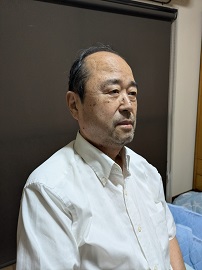
By Fumihiko Takeda
CENTRAL ARGUMENT
The authorization of collective self-defense expanded the circumstances in which Japan could use force on behalf of the United States. It did not, however, obtain any new American guarantee concerning the defense of Japan’s own territory. While it increased the danger of Japan becoming involved in war, its actual contribution to Japan’s security was extremely limited.
INTRODUCTION
Through the security legislation enacted in 2015, Japan became a country capable, albeit under limited conditions, of exercising the right of collective self-defense. Former Prime Minister Shinzo Abe explained that this would strengthen the Japan–U.S. alliance and thereby enhance Japan’s deterrence and security. But did it actually do so?
Opening the way for the Self-Defense Forces to use military force on the grounds that a closely associated country has been attacked—even when Japan itself has not been attacked—constitutes a fundamental transformation of Japan’s security policy. Yet this momentous change was made not through a constitutional amendment or a national referendum, but through a reinterpretation of the Constitution by a single cabinet.
Moreover, what increased as a result was the danger that Japan would participate in an American war. Japan did not obtain any new guarantee that the United States would necessarily defend it if Japan itself were attacked.
This essay examines, first, former Prime Minister Abe’s motives for authorizing the exercise of collective self-defense; second, its relationship with the Japan–U.S. Security Treaty; and third, the actual effects of collective self-defense on Japan’s security.
To state the conclusion at the outset, this policy increased Japan’s military usefulness to the United States. For Japan, however, it increased the danger of entanglement in war while producing almost no definite benefit concerning the defense of Japanese territory.
PERMITTING PREVIOUSLY PROHIBITED MILITARY ACTION WITHOUT AMENDING THE CONSTITUTION
For many years, the Japanese government maintained that Japan possessed the right of collective self-defense under international law, but that exercising it was constitutionally impermissible because it exceeded the minimum force necessary for Japan’s own defense under Article 9 of the Constitution.
The Abe Cabinet reversed that conclusion in its Cabinet Decision of July 2014. It declared that the use of collective self-defense could fall within the minimum force necessary for self-defense when an attack on a foreign country closely associated with Japan threatened Japan’s survival and created a clear danger that the people’s fundamental rights would be overturned.
This was not merely an adjustment of constitutional interpretation. It was, in substance, a constitutional amendment that permitted military action previously prohibited under the Constitution without changing a single word of the constitutional text.
Such a change should properly have been made in accordance with Article 96 of the Constitution, through a proposal by the Diet followed by a national referendum. At a meeting of the House of Representatives Commission on the Constitution in June 2015, all three constitutional scholars invited as expert witnesses—including one recommended by the Liberal Democratic Party—concluded that the security legislation was unconstitutional.
The government’s requirement of a “survival-threatening situation” does not provide an objective safeguard. What constitutes a clear danger threatening Japan’s survival is ultimately determined by the cabinet in office at the time. Much of the military and diplomatic information needed for that judgment is held by the government, while a Diet controlled by the governing parties approves the government’s determination.
Nor is the Cabinet itself an independent restraint upon the prime minister. Under Article 68 of the Constitution, the prime minister may dismiss any cabinet minister who opposes him.
If the government interprets the limits of its own authority and then determines for itself that the exceptional circumstances permitting the exercise of that authority exist, it can hardly be said that the written Constitution is effectively restraining political power.
WHY DID FORMER PRIME MINISTER ABE SEEK TO AUTHORIZE COLLECTIVE SELF-DEFENSE?
No publicly available evidence has established that former Prime Minister Abe was subjected by the United States to secret, coercive demands that could not be disclosed to the Japanese public, leaving him no choice but to authorize collective self-defense. We therefore cannot state as fact that a secret American order or secret agreement existed.
Nevertheless, the possibility that there was a political exchange between Japan and the United States cannot be dismissed.
At the Japan–U.S. summit meeting in April 2014, President Barack Obama explicitly stated that the Senkaku Islands were covered by Article V of the Japan–U.S. Security Treaty. In the joint statement issued at the same time, the United States declared that it “welcomed and supported” Japan’s consideration of exercising the right of collective self-defense.
It is significant that an American commitment concerning the defense of the Senkaku Islands and an expansion of Japan’s military cooperation with the United States were placed within the same political package.
However, Abe had already established the Advisory Panel on Reconstruction of the Legal Basis for Security in 2007, during his first administration. The authorization of collective self-defense was therefore not a policy that Abe suddenly adopted after being compelled by the United States. It should be regarded as a political objective that Abe himself had long pursued.
The United States wanted Japan, as its ally, to assume a larger military role. Abe believed that Japan could not become an equal ally of the United States unless it became capable of fighting alongside American forces. American demands and Abe’s own political convictions coincided.
But the “strength” or “equality” of an alliance does not in itself guarantee the safety of the Japanese people. Establishing a system that enables Japan to support American wars in order to earn American trust is entirely different from ensuring that Japan survives without becoming involved in those wars.
Abe turned the strengthening of the alliance into an objective in itself. He neglected the most important task: comparing the benefits that the strengthened alliance might bring Japan with the dangers it would create.
THE JAPAN–U.S. SECURITY TREATY DOES NOT REQUIRE JAPAN TO EXERCISE COLLECTIVE SELF-DEFENSE
Article V of the Japan–U.S. Security Treaty provides that, in the event of an armed attack against either party “in the territories under the administration of Japan,” both countries will act to meet the common danger in accordance with their respective constitutional provisions and processes.
This is the core provision establishing the American obligation to defend Japan. Article VI provides the basis on which Japan grants the United States the use of military bases.
The treaty, however, does not require Japan to dispatch the Self-Defense Forces to defend the United States if American forces are attacked in Taiwan, on American territory, or in some other region.
Even when Japan was unable to exercise collective self-defense, the treaty itself remained in effect and the American obligation to defend Japan continued to exist. Consequently, the 2015 authorization of collective self-defense was not indispensable to maintaining the Japan–U.S. Security Treaty.
Without amending the treaty itself, Japan alone changed its constitutional interpretation and domestic legislation, thereby expanding the range of joint military operations with the United States. The United States assumed no new treaty obligation, while Japan alone expanded both its capacity and political responsibility to support American forces.
This should be understood as a substantially one-sided expansion of the Japan–U.S. Security Treaty.
It is true that the legislation does not legally require Japan to enter a war automatically whenever the United States asks for assistance. In an actual crisis, however, if the United States requested Japanese support, would the Japanese government truly be able to refuse by declaring that the situation did not threaten Japan’s survival?
What changed was not the creation of an automatic legal obligation to enter a war, but the emergence of powerful de facto political pressure to participate in a war on behalf of the alliance.
A TAIWAN CONFLICT WOULD TRANSFORM JAPAN FROM A BASE PROVIDER INTO A BELLIGERENT
During the Korean and Vietnam Wars, American bases in Japan served as important points of departure and logistical support. Even so, Japan did not dispatch the Self-Defense Forces to the battlefield and avoided direct attacks on its homeland by the military adversaries of the United States.
The provision of military bases itself carried grave dangers, but Japan was at least not a country that used force alongside the United States.
If Japan exercises collective self-defense in a Taiwan conflict, that boundary will disappear. If the Self-Defense Forces protect American ships, support American forces, and use force against Chinese forces, China will regard Japan not merely as a provider of military bases but as a belligerent fighting as an integral part of the American war effort.
In addition to American bases such as Yokosuka, Kadena, and Sasebo, Japanese Self-Defense Force bases and command and communications facilities would face a dramatically increased risk of attack.
China is a major nuclear-armed power. To open the way for Japan to enter a war against China at a stage when Japan itself has not been attacked is not an ordinary security-policy decision. It is a decision that places the survival of the country and its people at stake.
Japan also bears historical responsibility for the enormous number of Chinese military personnel and civilians who died as a consequence of Japan’s past invasion of China. Japan must never again begin a war with China in conjunction with American policy toward Taiwan.
When Prime Minister Sanae Takaichi merely stated in the Diet that a Taiwan contingency involving the use of force could constitute a survival-threatening situation, China reacted strongly and Japan–China relations deteriorated.
This demonstrates that the 2015 legislation is not merely an abstract legal framework. It sends China a real political signal that Japan may participate in a Taiwan war.
THE SENKAKU ISLANDS DO NOT DEMONSTRATE THE EFFECTIVENESS OF COLLECTIVE SELF-DEFENSE
If China launches an armed attack against the Senkaku Islands, the issue would concern Japan’s right of individual self-defense against an attack upon Japan itself—not its right of collective self-defense.
The argument that Japan must be capable of exercising collective self-defense in order to defend the Senkaku Islands is therefore untenable.
The United States has repeatedly stated that Article V of the Japan–U.S. Security Treaty applies to the Senkaku Islands because they are currently under Japanese administration. The treaty, however, does not specifically state that American forces will necessarily fight Chinese forces and recapture the islands if they are occupied.
China might place coast guard vessels, fishing boats, drones, and other nonmilitary or quasi-military instruments at the forefront of its operations, gradually undermining Japanese administration through gray-zone methods that Japan would find difficult to classify as an armed attack.
In such circumstances, the United States might limit its assistance to intelligence, equipment, logistics, and economic sanctions while avoiding a direct war with China.
If China rapidly established occupation as a fait accompli, and neither Japan nor the United States attempted to recapture the islands because of the danger of a full-scale war, Japan might propose submitting the dispute to the International Court of Justice.
However, the Court’s consideration of a territorial dispute generally requires the consent of both parties. Japan proposed referring the Takeshima dispute to the International Court of Justice in 1954, 1962, and 2012, and South Korea rejected all three proposals. Similarly, if China refused, judicial proceedings over the Senkaku Islands could not begin.
The Senkaku Islands could then become a second Takeshima.
Japan would be confronted with the fact that, even after becoming capable of exercising collective self-defense, it could not recover territory it claimed as its own. Japan offered the United States the major gift of collective self-defense but obtained no guarantee that the United States would necessarily recover Japanese territory.
The asymmetry would then become unmistakable: collective self-defense, although highly valuable to the United States, might contribute almost nothing to the defense of Japan’s own territory.
THE DANGER OF CHINA ESTABLISHING CONTROL GRADUALLY
A full-scale invasion of Taiwan would impose enormous human and economic costs on China. By comparison, undermining Japan’s administration of the uninhabited Senkaku Islands and establishing de facto control over them might allow China to demonstrate an achievement to its domestic population at substantially lower risk.
If economic stagnation and social discontent intensify within China, the possibility cannot be excluded that the Senkaku issue could be used to direct public attention abroad and strengthen domestic support for the government.
It cannot, however, be asserted that China will necessarily seize the Senkaku Islands in order to divert attention from domestic discontent. Failure would damage the prestige of the Chinese leadership and could accelerate the military integration of the Japan–U.S. alliance, arguments in favor of Japanese nuclear armament, and international sanctions against China.
For precisely this reason, China would be more likely to employ ambiguous methods that make it difficult for Japan and the United States to decide upon military action than to conduct an unmistakable invasion by regular armed forces.
What Japan requires is not a plan to begin a major war in order to recover the islands after their occupation. It requires crisis-management arrangements between Japan and China that preserve Japanese administration and prevent accidental military conflict before an occupation occurs.
Collective self-defense provides no answer to this central problem.
THE POLITICAL PARALYSIS THAT COULD FOLLOW THE SEIZURE OF THE SENKAKU ISLANDS: A PARALLEL WITH 1941
If China attempted to deprive Japan of effective control over the Senkaku Islands, the greatest danger confronting the Japanese government would not be merely a shortage of military power. It would be political paralysis: an inability to decide how to classify the situation, at what stage action should be taken, who should order that action, and how much force should be used.
If China employed not regular military forces but coast guard vessels, fishing boats carrying maritime militia, or persons landing on the islands whose armament and status were unclear, Japan might not immediately be able to determine whether it was confronting criminal activity, a serious territorial violation, or an armed attack by another state.
The government would have to decide whether the Japan Coast Guard and police should respond first, whether the Self-Defense Forces should be ordered to conduct maritime-security or public-security operations, or whether an armed-attack situation should be declared and a defense operation initiated.
The Japan Coast Guard alone might be unable to remove the intruders, but deploying the Self-Defense Forces could allow China to characterize the situation as a military confrontation.
If the Self-Defense Forces opened fire, the incident might expand into a Japan–China war. If they did not fire, China might complete its occupation. Meanwhile, China could continue sending personnel and supplies, erect facilities, and turn its control into an accomplished fact.
Time itself would become a weapon for China.
The prime minister and cabinet ministers would simultaneously face conflicting questions:
“Should Japan begin a war with a nuclear power over a single uninhabited island?”
“If Japan does not remove the occupiers immediately, will the islands be lost forever?”
“Will American forces actually fight?”
“If Japan is seen as having fired first, will it lose American support?”
The Ministry of Defense, Ministry of Foreign Affairs, Japan Coast Guard, National Security Secretariat, governing parties, and opposition parties might not agree. Approval by the Diet, public opinion, financial markets, the safety of Japanese nationals abroad, and consultations with the United States would all become entangled.
Time might pass while no one was willing to assume ultimate responsibility. This would create a political vacuum.
This situation resembles the condition of Japan’s leadership before its decision to go to war against the United States in 1941.
At that time, the government and military understood that Japan had little prospect of long-term victory against the United States. Yet they were politically unable either to withdraw completely from China or to accept American demands.
The Imperial Conference of September 6, 1941, decided that diplomatic negotiations would continue while preparations for war against the United States, Britain, and the Netherlands would be completed by late October. If the negotiations did not produce an agreement acceptable to Japan, Japan would go to war.
By imposing a deadline for military preparations upon negotiations ostensibly intended to prevent war, the passage of time itself pushed Japan toward war. The Konoe Cabinet resigned without reaching a decision. The succeeding Tojo Cabinet was also unable to reverse the established course fundamentally and approved the decision to go to war at the Imperial Conference of December 1.
Of course, Japan’s war against the United States in 1941 and a possible future crisis over the Senkaku Islands would not be identical.
At that time, Japan was the country expanding its invasion of mainland China and French Indochina. In a Senkaku crisis, Japan would be attempting to preserve its present administration of the islands.
Nevertheless, the underlying structure would be strikingly similar: political leaders would be trapped in a situation in which every possible course involved grave losses. They would be unable to accept responsibility either for retreat or for war and would consequently be carried by deadlines and accomplished facts toward the worst possible choice.
The additional danger is that the authorization of collective self-defense has provided no clear standard capable of resolving this paralysis.
The Senkaku Islands concern individual self-defense, while American participation in their defense is not automatic. Yet joint Japan–U.S. operational planning and expectations have intensified. Japan could therefore find itself in an intermediate position in which it was unable either to decide independently to avoid war or to undertake military action on the basis of an unequivocal American guarantee.
The Abe administration created a system under which Japan could fight alongside the United States. It did not create a national decision-making system establishing when Japan should fight and when it should refuse to fight at the most difficult moment imaginable.
JAPAN MUST NOT BASE ITS NATIONAL SURVIVAL ON THE GOODWILL OF AN ALLY
The United States acts according to its own national interests. It does not desire a full-scale war with China, much less a nuclear war.
If Japan and China came into conflict, it would be entirely foreseeable that the United States might provide Japan with military, intelligence, and logistical support while attempting to avoid a full-scale confrontation between American and Chinese forces.
The most dangerous assumption for Japan is the unfounded belief that, because the Japan–U.S. alliance exists, the United States will necessarily fight alongside Japan until the very end.
How far the United States would be prepared to fight would be decided at that time by the American president and Congress, acting according to their assessment of American interests. Japan cannot make that decision for them.
Japan’s postwar diplomacy must not depend upon expectations of American goodwill. It must begin with the recognition that the United States, like every other state, may use Japan in pursuit of its own interests.
Independent diplomacy does not mean declaring the United States a permanent enemy. It means calmly distinguishing between situations in which American demands coincide with the safety of the Japanese people and situations in which they do not.
A policy that treats earning American trust as the supreme objective of diplomacy—even to the extent of accepting the risk that Japanese citizens may die in a war with China—is not an independent foreign policy.
CONCLUSION: THE HISTORICAL RESPONSIBILITY OF SHINZO ABE’S POLITICS
The 2015 security legislation did not so much give Japan new security as blur the boundary between an American war and a Japanese war.
Japan became capable of using force to assist the United States, but the United States assumed no new treaty obligation toward Japan. The defense of the Senkaku Islands was originally a matter of individual self-defense and Article V of the Japan–U.S. Security Treaty. It did not become certain merely because Japan authorized the exercise of collective self-defense.
Former Prime Minister Abe mistook the strengthening of the Japan–U.S. alliance for the security of Japan itself. Without a constitutional amendment or a national referendum, he made military cooperation advantageous to the United States possible and opened the way for Japan to participate in a war even when Japan itself had not been attacked.
At the same time, he obtained no guarantee that the United States would necessarily recover Japanese territory if Japan were attacked. The benefits and dangers of this policy are grossly disproportionate.
Prime Minister Fumimaro Konoe, unable to restrain the demands of the Japanese Army, concluded the Tripartite Pact with Germany and Italy. Through that alliance, he led Japan toward a war among the great powers and bore responsibility for the actual catastrophe that followed.
Shinzo Abe, by contrast, voluntarily transformed the Japan–U.S. alliance into what is, in effect, a system of joint participation in war and created an institutional structure through which Japan could once again be drawn into a war among the great powers.
The actions and consequences of the two men were not identical. Nevertheless, both created structures in which Japan sought security through an alliance but was instead brought closer to catastrophe. In this respect, I regard Shinzo Abe as the worst Japanese political leader of the postwar era.
The path Japan should take is not to demonstrate its ability to participate in American wars.
Japan must openly reconsider both the benefits and the dangers created by the Japan–U.S. Security Treaty and the American military bases in Japan. It must establish an independent foreign policy that does not turn China into a permanent enemy.
Decisions involving the use of force that could determine the survival of the nation must not be made through a cabinet’s constitutional reinterpretation or its application of the abstract concept of a “survival-threatening situation.”
They must be decided by the sovereign people themselves.
Fumihiko Takeda is the founder and Representative of the Lincoln Club, an independent political and policy research organization that he established in Japan on November 19, 1993. The Lincoln Club is his own organization and is not affiliated with, or a branch of, any organization in the United States.
In 1974, he founded the Cooperative Center, an information service company that conducted research and analysis for Japanese government agencies and major newspapers. In 1977, he established the Institute for Ultimate Democracy and has since devoted his career to the study of democracy, constitutional reform, electoral systems, and institutional design.
From 2006 to 2014, he served as a lecturer at the Graduate School of Law, Keio University. He is the author of numerous books and articles on democratic governance and political reform, including works on direct democracy, constitutional issues, and election systems. His policy proposals have been discussed in major Japanese publications and public policy forums.
PRINCIPAL REFERENCES
- Ministry of Foreign Affairs of Japan, Treaty of Mutual Cooperation and Security between Japan and the United States of America
https://www.mofa.go.jp/mofaj/area/usa/hosho/jyoyaku.html - Ministry of Foreign Affairs of Japan, Explanation of the Principal Provisions of the Japan–U.S. Security Treaty
https://www.mofa.go.jp/mofaj/area/usa/hosho/jyoyaku_k.html - Ministry of Foreign Affairs of Japan, Japan–U.S. Joint Statement, April 25, 2014
https://www.mofa.go.jp/na/na1/us/page24e_000045.html - Cabinet Decision of July 1, 2014, Development of Seamless Security Legislation to Ensure Japan’s Survival and Protect Its People
https://www.mofa.go.jp/fp/nsp/page23e_000273.html - Cabinet Secretariat, Development of Legislation for Peace and Security
https://www.cas.go.jp/jp/gaiyou/jimu/housei_seibi.html - Ministry of Foreign Affairs of Japan, Q&A on the Senkaku Islands
https://www.mofa.go.jp/mofaj/area/senkaku/qa_1010.html - Ministry of Foreign Affairs of Japan, Proposal to Refer the Takeshima Dispute to the International Court of Justice
https://www.mofa.go.jp/mofaj/area/takeshima/g_teiso.html - International Court of Justice, Basis of the Court’s Jurisdiction
https://www.icj-cij.org/basis-of-jurisdiction - Ministry of Defense of Japan, Defense of Japan 2025
https://www.mod.go.jp/j/press/wp/wp2025/ - Japan Center for Asian Historical Records, Japan–U.S. Negotiations as Seen in Official Documents: The Sixth and Eighth Imperial Conferences
https://www.jacar.go.jp/exhibition/nichibei/detail/index.html - Ministry of Defense of Japan, Responses to the Illegal Landing of Armed Groups on Remote Islands and Related Incidents
https://www.mod.go.jp/gsdf/tercom/img/file2701.pdf
| Comments in Chronological order (0 total comments) | |
| Report Abuse |
| Contact Us | About Us | Donate | Terms & Conditions |


|
All Rights Reserved. Copyright 2002 - 2026