| Wed. August 19, 2026 |
 |
|
||
|
||||
| ||||


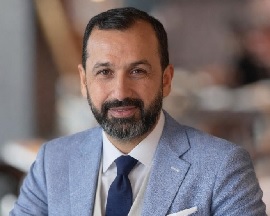
By Dr. Fahim Alshayea
Every day, millions of Americans use AI tools such as ChatGPT, Claude, and Grok at their desks. Rarely do they pause to consider who is financing the physical infrastructure powering these tools—or that an increasing share of it comes from foreign sovereign capital.
Washington has not closed the door on foreign capital. It has built two very different gates: one increasingly closing on strategic rivals such as China, and another opening wider for trusted partners, particularly in the Gulf.
This is not simply a tougher U.S. investment policy. It is the emergence of a new doctrine that distinguishes between foreign capital viewed primarily as a national security risk and foreign capital treated as a strategic asset in the race for AI leadership.
For strategic competitors, particularly China, Capitol Hill and the executive branch have made their stance clear, including through the 2026 National Defense Authorization Act (NDAA), which strengthens investment and technology guardrails related to China. For Gulf capital, however, a different doctrine is taking shape—what might be called “compute diplomacy.”
Washington appears to be institutionalizing a “technology-for-alignment” trade-off: welcoming investment into U.S. digital infrastructure while ensuring these nations remain anchored to American technology ecosystems rather than turning to Beijing.
The scale of this shift is becoming visible in the capital flows reshaping the AI infrastructure race. Gulf sovereign wealth funds are increasingly directing capital toward AI and digital infrastructure, with a growing share tied to U.S.-linked technology and infrastructure initiatives, a trend highlighted by analysis from the Center for Strategic and International Studies (CSIS).
By early 2026, Gulf governments and sovereign wealth funds had announced massive long-term investment commitments, increasingly directed toward U.S.-linked technology and infrastructure.
The shift reflects a move beyond passive holdings toward ownership of the silicon-and-concrete backbone of artificial intelligence.
As Mohammed Soliman, a senior fellow at the Middle East Institute, observed: “At a moment when capital spending on AI infrastructure is climbing into the hundreds of billions of dollars, the Gulf’s appetite for scale and speed gives Washington something rare: an external accelerator.”
The resilience of this implicit bargain was tested when strikes targeted Amazon Web Services infrastructure in the Gulf. Regional facilities were affected, yet AI capital expenditure continued to accelerate.
The response from investors suggested otherwise. Brookfield’s previously announced AI infrastructure partnership with Qatar remained a major example of Gulf capital committed to AI infrastructure.
Soon afterward, Abu Dhabi’s MGX, which has investments in OpenAI, Anthropic and xAI, emerged as a major investor in AI infrastructure.
Weeks later, a consortium comprising the Artificial Intelligence Infrastructure Partnership (AIP), MGX, and BlackRock’s Global Infrastructure Partners acquired Aligned Data Centers for approximately $40 billion, taking control of a portfolio spanning 51 campuses and more than 6.4GW of operational and planned capacity across major markets in the United States and Latin America.
Regional geopolitical instability did not prevent the Aligned transaction from closing.
The central U.S. mechanism for reviewing these flows is the Committee on Foreign Investment in the United States (CFIUS). Historically, Chinese investment has been a major focus of U.S. national-security scrutiny. Today, the Treasury Department is developing a “Known Investor” program designed to facilitate greater investment from allies and partners by collecting information from eligible foreign investors in advance of a CFIUS filing.
The ultimate stress test for this dual-gate policy was the $55 billion acquisition of Electronic Arts (EA) by a consortium comprising Saudi Arabia’s Public Investment Fund (PIF), Silver Lake, and Jared Kushner’s Affinity Partners.
The transaction extends far beyond gaming. EA holds vast amounts of user and engagement data across its global gaming ecosystem, while its technology and data have attracted attention in discussions about AI. Following the required regulatory approvals, the transaction closed on August 4, 2026, taking EA private.
The completed EA transaction provides a concrete case for assessing how Washington balances national-security concerns with foreign capital from a major partner. It also offers a real-world test of America’s emerging capital doctrine: in the race for AI supremacy, sovereign capital from key partners is not a vulnerability to be guarded against, but a strategic engine to be guided.
If Washington can successfully govern the data while absorbing the capital, it will have rewritten the rules of economic statecraft for the AI age. But if it stumbles, Washington may discover that opening one gate while tightening the other creates an asymmetry no regulatory committee or congressional inquiry can easily contain.
Dr. Fahim Alshayea is an economic and real estate investment consultant and CEO of Alshayea for Real Estate and Investment Consultancy. He specializes in strategic investment analysis, international capital flows, and real estate investment. He holds a PhD in Civil Law and has written on global investment trends, real estate markets, and the intersection of capital, economic policy, and strategic investment. His analyses and opinion articles have been published in The World Financial Review and European Financial Review.
| Comments in Chronological order (0 total comments) | |
| Report Abuse |
| Contact Us | About Us | Donate | Terms & Conditions |


|
All Rights Reserved. Copyright 2002 - 2026