| Thu. August 20, 2026 |
 |
|
||
|
||||
| ||||


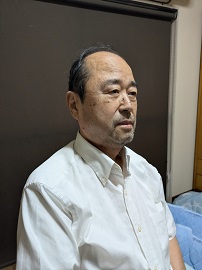
By Fumihiko Takeda
I am proud to have been born in Japan, and I love this country deeply.
Japan possesses distinctive values and a culture formed over a long history. It has accepted many cultures and technologies from abroad, not by rejecting them, but by improving and adapting them to Japanese society until they became its own. Medicine is one of the fields in which this ability is most clearly expressed.
Seen from within, Japanese healthcare has many problems: shortages of physicians, regional disparities, difficult hospital finances, and excessive workloads for medical personnel. This essay, however, is not intended to discuss the defects of Japan’s healthcare system. From the patient’s point of view, advanced medical care is available relatively quickly, with considerate treatment, and at a cost that is low by international standards. The High-Cost Medical Expense Benefit also helps prevent a serious illness from immediately destroying a household’s finances. In this respect, I believe Japanese healthcare is one of the systems closest to an ideal anywhere in the world.
There is a long history behind it. In the Nara period, the Hiden-in and Seyaku-in were established to assist the poor and the sick. In 1722, the Tokugawa shogunate opened the Koishikawa Yojosho, which provided free medical treatment to poor people for approximately 140 years, until the end of the shogunate. The Meiji government rapidly introduced Western medicine. The Health Insurance Act was enacted in 1922, and universal health insurance was achieved in 1961 after Japan’s defeat in the Second World War.
These developments cannot, of course, be simplified into one straight line of progress. Nevertheless, it is clear that Japanese politics and society have long regarded caring for the sick, rather than abandoning them, and making healthcare broadly available to the population as important public purposes.
Foreign visitors to Japan often express surprise at Japanese medical care. Examinations and tests are prompt; doctors, nurses, and technicians are courteous; facilities are well equipped; and the bill may seem astonishingly low compared with that in their own country. Individual travelers’ experiences cannot by themselves constitute an objective assessment of Japanese healthcare. Yet it would be a mistake to overlook the trust in Japan generated by medical care, together with safety, cleanliness, and kindness.
I do not believe that the power of Japanese medicine should remain confined within Japan.
Turning Japan’s Weaknesses into Diplomatic Strength
What I wish for my country is that it may enjoy lasting peace and security.
Yet Japan depends on foreign countries for much of the food needed by a population of more than 100 million and for much of the energy that is the lifeblood of industry. Japan is not capable of sustaining itself entirely on its own. It is also surrounded by major powers whose values concerning freedom, democracy, and human rights differ from those of Japan. Merely watching events unfold will not be enough to preserve Japan’s independence and peace.
One course is to frighten and subjugate other countries through military force. Japan abandoned that course through its defeat. Japan must therefore become a country of which people abroad can say, ‘We are fortunate that Japan exists’ and ‘Japan is necessary to our country.’
Postwar Japan has survived by supplying excellent products and services to the world and purchasing food and resources in return. The government has also assisted the development of other countries through official development assistance. But other countries eventually catch up with products, which are then exposed to price competition. Financial assistance may also fade from memory after the money has been spent.
Medicine, by contrast, is directly connected with human life, family, and peace of mind. Trust in Japan remains not only with the person whose life was saved, but also with that person’s family and community. Medical cooperation can become a long-term and humane form of diplomatic power, fundamentally different from supplying weapons or providing temporary financial assistance.
I therefore propose that Japan combine the medical industry—in which it excels and which suits the character of its people—with ODA, private investment, human-resource development, and AI, and develop it both as a national export industry and as a powerful strategy of peaceful diplomacy.
Exporting an Entire Medical System, Not Merely a Hospital
Around 1977, I published a proposal for exporting comprehensive hospitals overseas. At that time, I envisaged a combination of hospital construction, medical equipment, and the dispatch of physicians and nurses. Today, that concept can be developed on a far greater scale.
What Japan would export is not merely a hospital building. Centered on a general hospital of approximately 300 beds, Japan would provide an integrated package comprising medical equipment, pharmaceutical supply, electronic medical records, AI translation, telemedicine, equipment maintenance, hospital management, approximately one hundred Japanese advisers during the opening phase, and, where possible, even a medical insurance system. The dispatch of the initial Japanese advisory staff would normally last two to three years.
In the first phase, physicians, nurses, midwives, pharmacists, clinical laboratory technologists, radiological technologists, physical therapists, and medical-equipment engineers would be educated and trained in Japan. Students selected by the partner country would be invited to Japan on government scholarships and educated at Japanese universities, specialist schools, and medical institutions. Japan would designate receiving universities and provide student accommodation, tuition, teaching materials, health insurance, living expenses, and one return journey home each year.
Medical students would normally undergo six years of education, while nurses and other medical professionals would study for three to four years. Students would arrive in September and, before entering their regular courses the following April, receive instruction in Japanese, medical Japanese, Japanese customs, and relevant basic subjects.
If the partner country later makes a strong request, and sufficient students, teachers, finance, and legal arrangements can be secured, the second phase could establish a medical university or medical training institution in that country and assign Japanese faculty members to it. That institution, too, would ultimately be operated by local teachers and medical professionals.
The central hospital would contain the major departments required in the region: internal medicine, surgery, pediatrics, obstetrics and gynecology, orthopedics, ophthalmology, otolaryngology, emergency medicine, intensive care, infectious diseases, dialysis, diagnostic imaging, and clinical laboratories. The same hospital would not be imposed on every country. Departments and equipment would be adapted to local disease patterns, demographics, climate, religion, diet, disasters, and transportation.
A hospital of approximately 300 beds, rather than a giant institution of more than 500 beds, can serve both as a regional core hospital and as a clinical teaching hospital while limiting the burdens of construction and operation. Repeatedly deploying standardized 300-bed hospitals where they are needed would improve access and produce economies of scale more effectively than concentrating everything in a single giant facility.
The Partner Country’s Medical Personnel Must Be the Principal Actors
This proposal does not mean sending a complete Japanese medical workforce overseas and continuing treatment solely through Japanese personnel. That would be expensive and would leave the partner country permanently dependent on Japan.
At the opening stage, Japan would dispatch doctors, nurses, technicians, university teachers, hospital managers, and equipment engineers. Gradually, however, doctors and other professionals from the partner country who were educated in Japan would become the core personnel. The Japanese role would not be to replace local doctors and nurses, but to educate them, work beside them, and ultimately transfer the entire undertaking to them.
For one center, the hospital could employ 100 to 150 physicians, 350 to 500 nurses and midwives, 120 to 200 pharmacists, laboratory and radiological technologists, physical therapists and other professionals, and 150 to 250 people in administration, catering, cleaning, security, and facilities management. It would ultimately create approximately 700 to 900 local jobs.
Even if a comparatively large Japanese staff is present at the opening, its numbers should be reduced within approximately three years. The first locally trained generation must then teach the next. The success of this transfer should be the most important criterion by which the project is evaluated.
AI Has Removed the Language Barrier
One of the greatest differences between the 1977 proposal and the present is the existence of artificial intelligence.
Previously, a Japanese physician teaching abroad had to master a foreign language or rely on large numbers of interpreters with medical knowledge, while textbooks and procedures required years of translation. This language barrier was a major restriction on transferring Japanese medical knowledge and hospital management abroad on a large scale.
Today, a Japanese physician can lecture in Japanese while the speech is converted almost simultaneously into subtitles or audio in the local language. Students’ questions can be translated into Japanese and the teacher’s answer returned in the local language. Textbooks, nursing procedures, infection-control manuals, equipment instructions, and case materials can rapidly be translated into many languages, while recorded lectures can be studied repeatedly.
AI is not limited to translation. It can test each student’s understanding, produce remedial materials, and conduct simulated interviews and diagnostic exercises. It can connect local hospitals with Japanese specialist hospitals and support telemedicine, image and pathology interpretation, equipment fault diagnosis, and hospital-management analysis.
Where a translation error could threaten life—in drug dosages, surgical instructions, diagnoses, or informed-consent explanations—specialists must confirm AI output. AI should be used broadly for ordinary teaching and administration, while human verification is mandatory for critical clinical actions. This two-level system can combine safety with efficiency.
AI has transformed the Japanese language from a barrier to international medical expansion into a manageable condition. For the first time, a foundation exists for transmitting Japanese medical knowledge, clinical technique, and patient-centered service to many language regions simultaneously.
Neither Law nor the Local Medical Profession Can Be Avoided
Medicine deals with life and is fundamentally different from exporting ordinary goods. Japanese law and institutions cannot simply be transplanted into another country.
Numerous legal questions must be settled beforehand: local licensing of Japanese physicians and nurses; recognition of locally trained personnel; liability and compensation for medical accidents; approval of medicines and devices; management and cross-border transmission of patient information; telemedicine; the use of AI; hospital ownership; taxation; employment; and connection with the local insurance system.
This scholarship program is intended to train people who will serve the healthcare system of the partner country. Recipients should therefore be required, in principle, to return after graduation and work for a specified period in a designated medical institution, educational institution, or health administration. If that obligation is not fulfilled without legitimate reason, the agreement with the partner government may require repayment of all or part of the scholarship.
Before construction begins, the Japanese and partner governments must conclude a comprehensive medical-cooperation agreement. A joint committee of lawyers, medical administrators, physicians, and insurance experts from both countries should reconcile Japanese medical-safety standards with the partner country’s law.
The local medical association, nursing organizations, and universities must be involved as joint participants from the beginning. A plan decided solely between governments could provoke the accusation that Japan had come to seize the local medical market. If Japan makes clear that Japanese personnel will not monopolize treatment, that local professionals will be trained, and that management and clinical responsibility will be transferred progressively, resistance can be turned into cooperation.
Standardization and Economies of Scale
This must not end as a single custom-built hospital in a single country. In the first phase, a 300-bed hospital, staff accommodation, training facilities, and systems for energy, water, and medical-waste treatment should form one basic standardized unit for deployment in several countries. If a local university is created in the second phase, the university, student residences, and faculty housing would be added.
Standardizing basic design, patient rooms, operating theatres, medical gases, electronic records, curricula, devices, replacement parts, and maintenance procedures would reduce the time and cost of the second and third projects. Devices could be procured together, parts standardized, and AI teaching materials and remote-support centers shared. The standardization, quality control, mass production, and continuous improvement at which the Japanese automobile industry has excelled should be applied to hospitals and medical services.
Standardization must not mean uniformity. The foundation should be common, while parts of the hospital are modified for local diseases, religion, culture, climate, disasters, and electricity supply. Japan must combine Japanese quality with local need, rather than declaring that a Japanese design must be used unchanged.
Indicative Cost per Center
Costs will vary greatly with the country, prices, exchange rates, ground conditions, transportation, and the required level of medicine. Exact figures cannot yet be asserted. The following estimates indicate the scale of the policy.
Phase One: The Hospital-Centered Basic Project
|
Item |
Indicative cost |
|
Building for a 300-bed general hospital |
¥15-30 billion |
|
Medical equipment and hospital furnishings |
¥7-15 billion |
|
Staff housing and training facilities |
¥1.5-5 billion |
|
Electricity, water, communications, and medical-waste treatment |
¥2.5-7 billion |
|
Surveys, design, training, and opening preparations |
¥3-7 billion |
|
Contingency and price escalation |
¥3.5-9 billion |
|
Total |
¥32.5-73 billion |
Phase Two: Additional Cost if a Local Educational Institution Is Established
|
Item |
Additional indicative cost |
|
Medical university and educational facilities |
¥6-15 billion |
|
Student residences and faculty housing |
¥3-8 billion |
|
Educational and practical-training equipment |
¥2-5 billion |
|
Additional total |
¥11-28 billion |
If the partner government provides land and ordinary building materials and labor can be procured locally, approximately ¥50-60 billion may be a central estimate for the hospital-centered first phase. A complete model including a local university may cost approximately ¥60-90 billion. The first center bears design and development costs, but standardization and joint procurement should lower the unit cost of later centers.
Cost of Educating International Students in Japan
For each country and center, the program could accept fifty medical students and thirty students in nursing and other medical professions every year. With six years for medicine and three years for nursing and related training, the mature program would have 300 medical students and 90 other students in Japan at any one time, for a total of 390.
|
Category |
Annual intake |
Study period |
Students present |
|
Medical students |
50 |
6 years |
300 |
|
Nursing and other students |
30 |
3 years |
90 |
|
Total |
80 |
- |
390 |
If accommodation is provided without charge and each student also receives ¥200,000 per month for living expenses, those allowances alone amount to ¥936 million annually when the program is fully established. Tuition, admission charges, teaching materials, insurance, practical training, annual return travel, residence maintenance, Japanese-language education, student support, and additional clinical-teaching costs must also be included.
|
Item |
Annual estimate |
|
Living allowances |
¥936 million |
|
Tuition |
Approx. ¥209 million |
|
Admission charges for new students |
Approx. ¥23 million |
|
Annual return travel |
Approx. ¥78 million |
|
Materials, insurance, and practical training |
Approx. ¥120-200 million |
|
Residence maintenance |
Approx. ¥150-300 million |
|
Language education, student support, and administration |
Approx. ¥100-200 million |
|
Prudent annual program budget, including added university costs |
Approx. ¥2-2.5 billion |
The full cost would not arise in the first year. With eighty new students annually, expenditure might begin at approximately ¥400-500 million in the first year and rise to approximately ¥2-2.5 billion after the sixth year, when 390 students are present. Construction of dedicated residences would be additional. Initially, students could be distributed among existing universities and accommodated through expanded dormitories or leased housing.
Construction cost is not the only issue. Before work begins, the parties must decide who will pay for staff, medicines, consumables, electricity, water, maintenance, and equipment replacement after opening. If machinery fails, medicines disappear, and physicians leave after several years, the project will destroy rather than create diplomatic trust. A minimum ten-year operating plan and an equipment-replacement reserve must form part of the construction agreement.
Three Regional Models
These examples do not imply that negotiations with the named countries are taking place. They show how the concept could be adapted to different regional conditions.
Indonesia: An Archipelagic Medical Network
Indonesia consists of many islands and has a very large population. Gaps between advanced urban medicine and access in remote islands and rural areas can be severe. It also shares with Japan the risks of earthquakes, tsunamis, and volcanic eruptions.
The project should therefore be designed not as one isolated 300-bed hospital, but as a network linking the core hospital with clinics, mobile care, and telemedicine. Emergency medicine, surgery, obstetrics, pediatrics, infectious diseases, dialysis, and disaster medicine would be emphasized. Clinics on remote islands could transmit images and test data to the core hospital and to Japanese university hospitals through AI translation and remote diagnosis.
Japan can also provide experience in disaster medicine, earthquake-resistant construction, emergency power, water treatment, and evacuation-center management. If the hospital serves as both an everyday medical center and a regional command center during disasters, Japanese disaster-prevention and medical technologies can be exported together.
Kenya: An East African Regional Center
For Kenya, important issues include expanding universal health coverage, increasing medical personnel, emergency response, and digital technology. The aim should not be an elite hospital in the capital, but an educational and referral hospital jointly operated with local government and serving several regions.
Priorities would include maternal and child health, emergency surgery, infectious and noncommunicable diseases, laboratory services, nursing education, and equipment maintenance. Training equipment engineers would prevent costly machines from remaining unusable while waiting for a foreign company.
If trainees from neighboring countries were accepted alongside Kenyan physicians and nurses, one hospital could become an educational center for East Africa. When people trained in Japan and graduates of the local institution become medical leaders across the region, human ties with Japan will endure beyond one generation.
Jordan: Refugees and Regional Stability
Jordan has long borne the medical burden of caring for refugees and migrants in addition to its own citizens. A comprehensive hospital could therefore be positioned not merely as a national facility, but as an institution serving citizens and refugees alike and contributing to regional stability.
Priorities would include maternal and child health, chronic illness, trauma, rehabilitation, mental health, and telemedicine. International organizations and other donor countries should contribute to operating costs, while Japan leads the overall design, education, and quality control.
If local residents believe that a hospital favors foreigners alone, it will deepen division. The project must therefore serve residents and refugees within the same medical area while increasing beds, jobs, and educational opportunities for the whole community. Medicine should become not merely humanitarian assistance, but an instrument of peacebuilding.
Japan’s National Organization
The greatest obstacle is not a lack of Japanese capability. It is the dispersal of that capability.
The Ministry of Health, Labour and Welfare is responsible for quality and safety; the Ministry of Foreign Affairs for diplomacy and intergovernmental negotiations; the Ministry of Finance for fiscal discipline; and the Ministry of Economy, Trade and Industry for industry and exports. JICA handles institutional support and training; trading companies manage overseas business; construction companies build hospitals; equipment manufacturers supply machinery; and universities and hospitals provide teaching and medicine. Each possesses outstanding ability, but separate action will never create one national undertaking.
Japan already has governmental and public-private bodies concerned with health strategy and international medical development. This proposal, however, requires not an exchange of information or a collection of separate support programs, but a command structure responsible for everything from selecting countries to completing hospitals, managing their opening years, and transferring them locally.
An International Medical Cooperation Strategy Headquarters should therefore be created under the Prime Minister, with a dedicated minister. Beneath it, a permanent implementing body—provisionally, the Japan International Medical Development Organization—should bring together ministries, JICA, international financial institutions, university hospitals, professional associations, trading companies, builders, medical-device and pharmaceutical companies, and AI and communications firms.
Each project must have one person with final responsibility. If ministries issue separate instructions, no one is responsible for the whole. That leader must have authority to coordinate budgets, schedules, contracts, and appointments, with a fixed time limit for resolving interministerial disagreements.
Once a partner country is chosen, the two governments and participating companies should establish a country-specific project company—for example, a Japan-Kenya Medical Development Corporation—responsible locally for construction, procurement, employment, and operation. The partner government, local authorities, medical association, universities, and community representatives should participate in its board or supervisory body.
This diplomatic strategy demands major political decisions, and Japan must find people capable of making them. A country with strong political authority and rapid decision-making may recognize that its existing overseas strategy costs too much and creates resentment, and may adopt this medical strategy at once. If Japan remains trapped in slow bureaucratic coordination, it may be overtaken and unable to match that speed. This deeply concerns me.
Combining Assistance with a Sustainable Enterprise
Japan need not bear the entire ¥50-60 billion cost of each center through grant ODA.
The partner government can provide land and local staff salaries. Japanese grants can fund preliminary studies, training, care for low-income patients, and basic infrastructure. Yen loans and long-term finance can support hospital and university construction, while the Japanese government and private companies invest in the project company. Equipment can be purchased jointly, leased, or paid for in installments. After opening, revenue can combine local insurance, public expenditure, appropriate patient charges, corporate and higher-income services, and international funds.
If poor people are excluded, the concept loses the philosophy of Japanese medicine. But if everything remains free forever, it cannot survive financially. Japan and the partner country must combine means-tested contributions, insurance, and public subsidies so that low-income patients are not denied advanced care.
Japanese assistance should extend beyond construction to systems that restrain medical costs. Preventive medicine, generic drugs, standard treatment, joint procurement, electronic billing, and controls on unnecessary care can be adapted from Japanese experience. If good medicine expands while the burden on the state and the patient is contained, the diplomatic effect will be still greater.
Japan Need Not Follow China’s Path
One reason China is powerful in large overseas projects is its ability to unite diplomacy, finance, construction, and companies under a national policy. Japan may possess superior individual technologies and integrity, yet fall behind in its ability to combine them as a state.
Japan need not imitate another country’s method. Its purpose should not be to create permanent dependence, but to enable the partner country to operate its own healthcare. Japanese personnel should not lead forever. Local people should be educated, and the hospitals, universities, technology, and management ultimately transferred to them, followed by continued cooperation between equals.
That is the distinctive model of national cooperation Japan can offer the world.
Security through Medicine
Protecting Japan does not mean only increasing weapons. Saving lives across the world and making Japan indispensable is also national security.
Would a country whose physicians and nurses Japan had educated, whose families Japan had helped save, and whose hospitals and healthcare system Japan had built with it easily become hostile to Japan? Even when relations between governments temporarily deteriorate, trust built between peoples through medicine can remain. If military force is power that intimidates governments, medicine is power that enters the hearts of people.
This is not charity alone. It creates long-term markets for Japanese construction, equipment, pharmaceuticals, communications, AI, maintenance, education, insurance, and logistics. It creates local employment, while international experience improves Japanese medical technology. International networks for infectious-disease information and disaster medicine also protect the Japanese people.
Japan’s interests and the partner country’s interests point in the same direction. That is the strength of this proposal.
Conclusion: Making Japan’s Very Existence a Source of Diplomatic Power
Japan depends on foreign countries for food and energy and cannot confront the major powers around it through military force alone. It should therefore build relationships in which Japan’s existence itself is beneficial to the world and many countries would suffer if Japan disappeared. If Japan’s security were threatened and voices supporting Japan arose throughout the world, while the aggressor was condemned everywhere, those voices could become the foundation of Japanese diplomatic power.
The value of Japanese healthcare lies not only in advanced equipment and doctors’ skills. It lies in an entire system that avoids making patients wait unnecessarily, refuses as few patients as possible, treats them with kindness, and provides necessary care while controlling costs. This patient-centered medicine should be spread throughout the world in forms adapted to local culture and institutions and ultimately operated by local people themselves.
Japan should pursue as a national strategy a ‘Japanese medical system’ integrating hospitals, medical universities, AI, telemedicine, maintenance technology, insurance, legal coordination, and public-private finance. It can become a new Japanese export industry, transform ODA from temporary assistance into cooperation that creates independence, save lives throughout the world, and build lasting trust in Japan.
Japan should become a country that is needed through medicine, not a country that is feared through force.
I believe that this is the powerful and sustainable strategy of peaceful diplomacy most suited to Japan.
Fumihiko Takeda is the founder and Representative of the Lincoln Club, an independent political and policy research organization that he established in Japan on November 19, 1993. The Lincoln Club is his own organization and is not affiliated with, or a branch of, any organization in the United States.
In 1974, he founded the Cooperative Center, an information service company that conducted research and analysis for Japanese government agencies and major newspapers. In 1977, he established the Institute for Ultimate Democracy and has since devoted his career to the study of democracy, constitutional reform, electoral systems, and institutional design.
From 2006 to 2014, he served as a lecturer at the Graduate School of Law, Keio University. He is the author of numerous books and articles on democratic governance and political reform, including works on direct democracy, constitutional issues, and election systems. His policy proposals have been discussed in major Japanese publications and public policy forums.
| Comments in Chronological order (0 total comments) | |
| Report Abuse |
| Contact Us | About Us | Donate | Terms & Conditions |


|
All Rights Reserved. Copyright 2002 - 2026