| Tue. June 23, 2026 |
 |
|
||
|
||||
| ||||


The Gambia has all it takes to stand shoulders with Botswana on economic development comparatively. Both countries share a homologous population size and started off at the same time in the 1960s. However, while Botswana boasts of the highest human development index in Sub-Saharan Africa (0.698, 2016 est.). In the same year, The Gambia’s was at 0.452; the lowest spectrum of human development. Also, the 2016 Corruption Perception Index ranked Botswana 35 th, while The Gambia was ranked 145th, as a more corrupt country. In addition, as of 2017, Botswana’s per capita income was at $7,141, against the Gambia’s derisory $488. Further comparisons are at extreme ends. While it could be argued that Botswana has diamonds, the country is landlocked, while Gambia is coastal. Botswana has also faced drought, desertification and a high rate of the HIV epidemic. An explanation to these divergences is partly that the Gambia has had extractive institutions since its independence unlike Botswana.
Yahya Jammeh, Gambia’s 2nd president, could not do much to salvage the country from the peracute economic crisis he inherited from Dawda Jawara who he ousted from power. Jammeh had more titles beside his name than development policies. He became head of state in 1994 through a military coup and spent more than 2 decades in office. Jammeh monopolized elections, siphoned public funds, suppressed the press, hawked scary and threatening expressions whenever on the airwaves, and committed a wide range of human rights abuses. There were disappearances, illegal imprisonments, witch hunts etc., mostly his political opponents and upper echelon critics. Much of his lackluster authoritarianism was hybridized with several malcontents and dirt cheap populist advertisements including claims that he could cure HIV/AIDS and asthma with natural herbs. Jammeh was distracted by several parish-pump and picayune interests, focused on securing further diverse titles, implying that economically developing the country was probably the least on his agenda.
However, a year ago, there was a wave of felicity in the country, and even across the continent, when the Economic Community of West African States launched a successful intervention in the Gambia to restore democracy after Jammeh had lost the 2016 presidential election to his rival, Adama Barrow and refused to step down, after conceding defeat. At least the regional institution got something to advertise as part of her achievements in recent times. Jammeh was mollycoddled out of office and Barrow became the president. A majority of the citizens were excited based on the ideology that economic development can be fostered by an effective democracy working in the Gambia. But very few retained a certain degree of pessimism. First, this was because available development literature has shown that such transitions on the continent occasionally results into anything different. In fact, according to Acemoglu and Robinson in ‘Why Nations Failed’, a new government inheriting a set of extractive institutions would have nanoscopic incentives to implement reforms and do things differently. Perhaps, Barrow would do things differently. A year is too short to conduct any form of evaluation.
Secondly, most of Barrow’s first appointments were sentimentally given to political allies. What is more worrisome was that exceedingly important ministries that required excellent economic technocrats that could situate the economy on a part of rescue and growth were given to politicians with contracted or no professional background in development economics. Except several commendable rights and media reforms, as well as commencing the repair of international relationships that Jammeh defenestrated, much has not changed since Barrow became president; albeit one is aware of the ruins the country was in, following decades of horrendous governance. Some expeditious steps were expected from Barrow through hitting the ground running. There is a growing air of complaints and dissatisfaction across the country, as well as petering patience from the Gambians over Barrow’s presidency. Many think he is too slow and indecisive. In addition, there has been a growing internal security crisis and sense of insecurity following the fragility of the topical Gambian security system. Fractionalization crisis is also emerging.
Barrow must act fast and leverage on the domestic and international goodwill he has left to pursue a large developmental ambition. He runs a small country with a considerable number of potentials. The tourism sector can to be quickly expanded through appurtenant reforms and tactics. Corruption is still pervasive in the country. It was expected that Barrow would have initiated the implementation of certain fiscal transparency reforms on assuming office with key ingredients such as open budget, making sure an access to information law exists and implementing plans for the government to be part of the multilateral Open Government Partnership. These elements are needful toward addressing political corruption in the country. Development aid has continued to flow into the country. However, without a thriving fiscal transparency regime where the citizens are empowered to provide effective public oversight, much of the aid would not reach its beneficiaries.
With +60% poverty rate in the country, a lot has to be done. The government must leverage on donor assistance to fix the basic schools and primary healthcare centers, both in infrastructure and human resources. The entire emphasis has to be toward wealth creation through value-added agriculture and rapid attraction of foreign investment. For the latter, obviously, infrastructure deficit is a key challenge; the country must address this and create an enabling environment for investors. Education should be toward building the skills of the youth so that they can create jobs and be relevant in the job market. The Gambia was ranked 146th in the 2018 Ease of Doing Business Index, this must be improved upon. More focus should be placed toward creating a special economic zone and instituting frameworks that would simplify the cost of starting a business, registering property; protecting investors; and providing tax incentives etc. This is the only ticket to manufacturing, modernization, industrialization and technological breakthrough. The Ethiopian model of rapid infrastructural growth and pro-East strategy for industrialization have to be understudied by the Barrow cabinet.
In furtherance, the public sector has to be reformed to deliver results analogous with the pace of the world. The sector has to be delivered from decades of patronage and corrupt regime to the one of service, excellence, productivity and performance.
Development is all about guts! The Gambia can aspire to it. Barrow has a lot of work to do. Politically, he must also reform the electoral process and make sure it does not gravitate toward exacerbated ethnicization and patronage politics. His administration should make sure checks and balances are instituted from a cross section of the society and further arm the civil society with the tools to contribute to this process.
Finally, although the contemporary global energy dynamics is changing fast, The Gambia will start producing oil within the year and it will be interesting to see how Barrow manages this as a means of revenue for the development of the country. For the rest of the continent, resources such as oil have rather been seen as a curse, as evidenced in the occurrence of the Dutch disease, patronage politics, as well as conflict etc. Let’s see if Barrow and Gambia do this differently. Gambia must leverage on this new political climate.
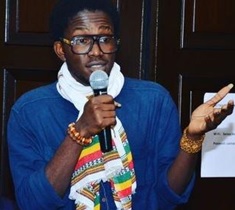
Chambers Umezulike is a Development Governance Expert, Researcher and Writer. He is currently a senior program manager and lead researcher at Connected Development. He has a Masters in International Studies, Economic Governance, and Development from the University of Nairobi, Kenya; and aspires to be a PhD candidate in a renowned institution of higher learning. He has written 3 books including "Leadership, Policy and Economic Development in Nigeria and Singapore; a Comparative (1960 - 1990).” He also has papers on learned academic journals, with a considerable number of articles on an avalanche of Africa’s political and socio-economic issues on several online platforms and offline newspapers.
| Comments in Chronological order (31 total comments) | |
| Report Abuse |
|
|
|
I know this web site offers quality dependent content and additional material, is there any other web site which offers such information in quality |
|
|
|
|
Normally I do not read post on blogs, however I would like to say that this write-up very pressured me to check out and do so! Your writing taste h |
|
|
|
|
I'm no longer certain where you are getting your info, however good topic. I needs to spend some time studying much more or figuring out more. Than |
|
|
|
|
Hello there, just became aware of your blog through Google, and found that it is really informative. I'm going to watch out for brussels. I'll be g |
|
|
|
|
you're actually a good webmaster. The website loading speed is incredible. It kind of feels that you are doing any unique trick. Moreover, The cont |
|
|
|
|
Have you ever thought about writing an e-book or guest authoring on other websites? I have a blog based on the same information you discuss and wou |
|
|
|
|
My brother suggested I might like this web site. He was once totally right. This submit actually made my day. You can not consider just how much ti |
|
|
|
|
I don't even know how I ended up here, but I thought this post was great. I don't know who you are but certainly you're going to a famous blogger i |
|
|
|
|
Simply wish to say your article is as amazing. The clarity in your post is simply nice and i can assume you're an expert on this subject. Well with |
|
|
|
|
Good day! This post could not be written any better! Reading this post reminds me of my old room mate! He always kept talking about this. I will fo |
|
|
|
|
Wow, awesome blog structure! How lengthy have you been blogging for? you make running a blog glance easy. The full glance of your site is wonderful |
|
|
|
|
My brother suggested I might like this web site. He was totally right. This post actually made my day. You can not imagine simply how much time I h |
|
|
|
|
Helpful information. Lucky me I found your site by chance, and I'm shocked why this twist of fate did not came about earlier! I bookmarked it. [u |
|
|
|
|
Ahaa, its pleasant discussion regarding this post at this place at this webpage, I have read all that, so now me also commenting at this place. [ |
|
|
|
|
I every time used to study post in news papers but now as I am a user of net therefore from now I am using net for articles, thanks to web. [url= |
|
|
|
|
Your style is really unique in comparison to other people I have read stuff from. Thank you for posting when you've got the opportunity, Guess I wi |
|
|
|
|
I have been browsing online more than 3 hours today, yet I never found any interesting article like yours. It is pretty worth enough for me. In my |
|
|
|
|
Hi there, I think your site could be having web browser compatibility issues. Whenever I take a look at your site in Safari, it looks fine however, |
|
|
|
|
Definitely believe that which you said. Your favourite justification seemed to be on the web the easiest thing to understand of. I say to you, I ce |
|
|
|
|
hi!,I like your writing so a lot! percentage we keep in touch more approximately your article on AOL? I need a specialist in this house to resolve |
|
|
|
|
Magnificent goods from you, man. I've take into account your stuff previous to and you are simply extremely magnificent. I actually like what you'v |
|
|
|
|
Hello! Someone in my Facebook group shared this site with us so I came to check it out. I'm definitely loving the information. I'm book-marking and |
|
|
|
| Youre so cool! I dont suppose Ive read something like this before. So good to search out somebody with some authentic ideas on this subject. realy tha | |
|
|
|
I'm extremely impressed with your writing skills and also with the layout on your weblog. Is this a paid theme or did you modify it yourself? Anywa |
|
|
|
|
We are a group of volunteers and opening a new scheme in our community. Your site provided us with valuable information to work on. You've done a f |
|
|
|
|
Wonderful article! This is the kind of info that are meant to be shared around the web. Disgrace on the seek engines for no longer positioning this |
|
|
|
|
I am really inspired along with your writing skills and also with the format for your blog. Is this a paid subject or did you customize it your sel |
|
|
|
|
Thank you for the auspicious writeup. It in truth was once a entertainment account it. Look complicated to far introduced agreeable from you! By th |
|
|
|
|
Do you have a spam problem on this website I also am a blogger, and I was curious about your situation we have developed some nice practices and we |
|
|
|
|
Excellent site. A lot of helpful information here. I am sending it to several friends ans additionally sharing in delicious. And certainly, thanks |
|
|
|
| a href=http://canadan-pharmacy.comviagra canada/a
over the counter viagra alternative uk http://canadan-pharmacy.com |
|
| Contact Us | About Us | Donate | Terms & Conditions |


|
All Rights Reserved. Copyright 2002 - 2026