| Tue. March 03, 2026 | |

|
|
|
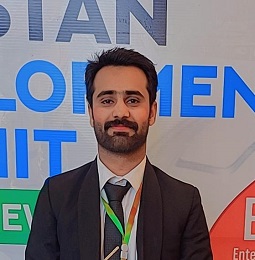 Just before dawn at Xichang, as the launch pad lights flickered against the pre-dawn chill, Pakistan’s Advanced Remote Sensing Satellite roared into the heavens. In that split second, we were reminded how astropolitics has shifted from theory to immediate reality. This machine in orbit spans utility and risk, hope and suspicion. Imagine a Punjab farmer, smartphone in hand, watching last night’s satellite images as they guide the sowing season. Now think of an intelligence officer, scrutinizing the same data to track troop formations along the Line of Control. This convergence of civilian and strategic functions sits at the core of SUPARCO’s latest triumph. Its imaging systems transmit life-saving insights, such as flood patterns, crop health indicators, urban growth, but they also frame military targets with surgical precision. The Geopolitical Imperative From a realist standpoint, whoever holds sway in orbit holds sway on Earth. Everett Dolman’s insight in Astropolitik remains prophetic: true dominance emerges from the vantage of space. Pakistan’s new satellite offers sub-meter resolution and frequent revisit cycles that could redefine how we monitor our maritime borders, oversee shipping in the Arabian Sea, and detect ceasefire violations in near real time. In regions of long-standing mistrust, such capabilities act as both shield and sword. The Need for Structured Oversight Yet raw power demands structured oversight. SUPARCO must outgrow its image as a mere launch agency. It needs robust regulatory tools: clear licensing standards that separate civilian projects from military initiatives, systematic payload reviews conducted by independent experts, and a public registry of satellite capabilities and data distribution policies. Neighbors need reassurance, and Pakistan must lead by example. Diversifying Partnerships Our partnership with China, cemented under CPEC, has propelled technical leaps and expedited launches. However, unchecked reliance risks compromising our strategic autonomy. We cannot afford to let any single ally script our space ambitions. Diversification should guide our next steps—formal research partnerships with Turkey’s TÜBITAK, data-sharing agreements with Malaysia’s JUPEM, collaborative training programs under UNOOSA’s banner. A network of equals will broaden our influence and fortify our sovereignty. Pioneering International Norms Turning to international law, the 1967 Outer Space Treaty banned nuclear weapons in orbit but left conventional surveillance untouched. Today’s remote sensing satellites operate in this gray zone without oversight. No inspectors verify claims, no registry tracks dual-use payloads. Pakistan has an opportunity to pioneer change. Propose a South Asian registry of dual-use satellites accompanied by annual confidence-building workshops and reciprocal imagery exchanges. This constructivist approach could transform suspicion into cooperation. Leveraging Satellite Data for Development Beyond security logic, satellite data can drive Pakistan’s development. Precision agriculture informed by satellite-derived NDVI metrics could boost yields in Punjab by optimizing water and fertilizer use. Flood-inundation maps from SAR imagery could guide relief teams along the Indus’s floodplains where each moment counts. Water-stress maps for Balochistan could direct scarce resources to communities facing existential drought. Such applications turn abstract sensors into tangible lifelines for millions. Cultivating Human Capital and Industry But such benefits hinge on people. SUPARCO’s institutional culture needs revitalization around capacity-building. Offer postgraduate programs in space law at Pakistani universities, establish fellowships for remote sensing analysts, and host bootcamps for systems engineers. Meanwhile, public-private partnerships modeled on Europe’s Copernicus could spark an indigenous remote sensing industry. This synergy would encourage innovation under a framework of accountability. Charting a Strategic Path Forward Meanwhile, India’s constellation is expanding—its revisit cadence rises, its use cases multiply. If Pakistan merely reacts, we risk an endless chase. Instead, let us chart a path of deliberate advancement where governance and innovation move in concert. Adopt a strategic tempo that leverages policy, diplomacy, and technical prowess. In the next quarter, SUPARCO should convene a national space governance council, comprising legal scholars, engineers, economists, and military officials. Their mandate: draft regulations on licensing, payload transparency, and civilian-military data separation. Simultaneously, launch diplomatic envoys to establish the South Asian space confidence pact where every nation shares dual-use capabilities in good faith. Parallel investments in education and industry will ensure that our satellite program rests on expertise and entrepreneurship. Pakistan’s orbit should not echo our terrestrial rivalries alone. It should reflect our collective ambition—to harness space for human development while fortifying national resilience. By embedding rigorous governance, cultivating diverse partnerships, and nurturing human capital, we can ensure our satellite’s passage above carries more than sensors. It carries our vision for a future where technology uplifts societies and secures peace. The rocket’s roar in the early hours at Xichang was a moment of triumph. Let it also be the spark for systemic change. In this new era of astropolitics, Pakistan’s ascent will be defined not just by payloads and orbits, but by the values and institutions we build here on Earth. Mohammad Zain is a writer and researcher with a background in English Literature and International Relations from the National University of Modern Languages (NUML), Islamabad. His work explores the intersection of geopolitics, strategic technologies, and political philosophy, with a particular interest in space governance, South Asian diplomacy, and global power shifts. He has previously written on the weaponization of space, emerging multipolarity, and the ethics of artificial intelligence in warfare.
|
|



| Contact Us | About Us | Donate | Terms & Conditions |


|
All Rights Reserved. Copyright 2002 - 2026