| Tue. March 03, 2026 | |

|
|
|
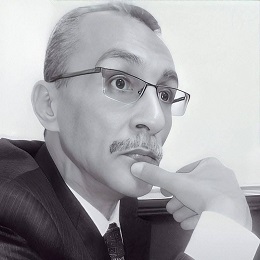 By Muhammad Adel Zaky Ever since I began critiquing political economy as a social science—European in origin and flavor—"Modernity" has been, for me, a mode of thinking forcefully imposed upon the world under the guise of implementing reason and sanctifying science, rather than merely a historical phase. Consequently, I was never one of those who viewed Modernity as salvation, or a necessary stage in the evolution of human consciousness. I always saw it as a moment of violence, a moment where the world was reshaped according to a monolithic logic that claimed universality and asserted global mastery, yet recognized only the European Self, which dated the world starting from its own history. Modernity came to us only carried on the spears of colonizers and aboard the ships that docked on our shores to empty our minds of their selves, not just to loot the wealth of our afflicted nations. Modernity arrived with sheer aggression, and not through the encyclopedias of philosophers and the books of the Enlightenment, as it was marketed and embedded in our colonized minds. In the underdeveloped parts of the global capitalist system, we were not born into Modernity; we were shocked by it. We received it as an external assault. It was a civilizational shock, a swift raid on a fragile consciousness, stripped of its historical specificity. Through my reading of the writings of Petty, Cantillon, Quesnay, Smith, Ricardo, Ramsay, Malthus, Rodbertus, and Marx, I witnessed how Modernity constructed itself through the concept of the Market, and how the economy transformed from a teleological social activity into a system that produces man just as it produces a commodity. All the concepts of progress residing in the Modernity discourse, and all the axioms of individual liberty and rationality, were, fundamentally, merely tools for the reproduction of domination, not for the liberation of human beings. Marx himself, who attempted to wrestle this consciousness from the grip of Capital, fell into the Modernity trap when he presumed that history follows a single evolutionary line drawing its development from European history, and that all societies would follow the same path. Modernity, as it reached us, was a closed system, not an open, critical question—a system that imposes its logic as a natural law and measures everything else by its units. Even Time, which I used to study as a neglected factor in value formation, was transformed within the discourse of Modernity into a tool of discipline and a weapon in the hand of Capital to organize life, not to liberate it from its absurdity and cruelty. Therefore, my intellectual battle with Modernity was nothing but a struggle against the essence of the term, against its structure that held contempt for everything outside itself, transforming the world into one market, one factory, and one history. To oppose Modernity, then, does not mean regressing, but means rebelling against the authority of intellectual guardianship, against the premise that makes the European trajectory the only possible historical one. We have been greatly deceived by the discourse of progress, and we must stop. Not because progress in itself is false, but because the standard they formulated for progress was not built upon us, or for our sake, but was built against us. It is untenable to measure our liberation by the standards of those who plundered our creative souls. Any consciousness we possess is meaningless if it is merely a copy of the very instrument of hegemony. Thus, the question is no longer: "How do we catch up with the era?" but: "What era do we want to create?" However, our answer to this question can only be correct starting from a critical stance, one that rejects European Centrality. The European dominance over the world, since its modern renaissance, has been fundamentally a symbolic, epistemic, historical, and linguistic one—a dominance over man as a historical/cultural being, and not merely a technological, military, or economic superiority. Since its inception, European civilization has monopolized the meaning of victory, and was not content with that alone; it erased from historical existence everything and everyone that did not belong to it or pass through it. It is a civilization that internalized superiority as an epistemic right that makes it the only possible reference for measuring humanity. Europe produced its modern "science," not through a dialectical, epistemic dialogue with other civilizations, but through a forced cognitive separation between the so-called "European Mind" and the "Mythological East." The history of science, in the European narrative, begins with Greece—but a Greece severed from its Eastern roots, one that was consequently presented within a "pure Western" framework, as if thought was born pristine, rational, Greek, and white! This was not the Greece that was part of the Eastern sphere, intertwined with Egyptian, Babylonian, and Phoenician thought. In this manner, Europe reassembled time, making its history the global history, and its major moments, like the Age of Enlightenment and the Industrial Revolution, the turning points for the history of all humankind, without regard for other histories. Consequently, it reduced the history of other peoples to a mere shadow of its own history, and re-dated the colonized world starting from the moment of its colonization, as if these peoples were nothing before their entry into the register of hegemony. India was not an ancient civilization, but "a land of backward wonders"; Africa was merely "a continent without history"; and Arabs were nothing but Bedouins in a burning desert until the "lights of the West" shone upon them. In this way, the European narrative became the only one permitted to speak on behalf of humanity. It is the one that defines "Modernity," "Religion," "Science," "Right," "Freedom," "Identity," and "Meaning." Anything that falls outside these molds is either popular folklore or backwardness that must be overcome. More dangerously, victorious Europe excluded and nullified the presence of other peoples from the collective memory of humanity. It was not content merely to impose its concepts: Religion was no longer a spiritual experience of multiple origins, but became the "White Christ," with European features, heading every representation of the Divine, while the historical, Eastern, poor, and revolutionary Jesus was excluded. Theology was transformed into an imperial tool, glorifying a new chosen people—the European man—and excluding everything non-European as pagan, mysterious, stupid, or Oriental! Politics is another narrative of sacred superiority. European democracy is presented as the sole rational and civilized model. All other systems, whether Eastern monarchies, stateless societies, nomadic organizations, traditions of Shura (consultation), civil emirates, or tribal councils, are considered a deviation from the "progressive line of civilization." Thus, Europe monopolized the image of the future, not content with monopolizing the past. Language, in turn, became an instrument of colonization: English, French, and German are the languages of "Modernity," "Universities," "Science," "Economics," and "Reason," not just European languages, while Arabic, Swahili, Persian, and Amazigh became mere dialects—traditional, emotional, unfit for research, unfit for politics, and unfit for "Modernity." Culture was also redefined within the bounds of European comprehensibility. Art, for instance, became the European painting; music became the orchestra; and theater became the Greek tragedy reproduced on the British or French stage. It is as if all of humanity has produced nothing of value except what was sanctioned by European academies. I am not speaking here only of military or economic dominance, but of a comprehensive moral system that produces the world and redefines it according to its interests and standards. This is precisely what makes the critique of this European Centrality a dual mission: on the one hand, it is a deconstruction of the myth of white superiority, and on the other, it is a liberation of knowledge from its colonization. This proceeds from a firm conviction that humanity cannot progress unless it listens to the history of those whose lives were plundered, not the history of those who did the plundering. Muhammad Adel Zaky is an Egyptian researcher specializing in the history of economic thought. He is the author of Critique of Political Economy, a book that has gone through six editions. His research explores the evolution of economic ideas in relation to social and historical change.
|
|



| Contact Us | About Us | Donate | Terms & Conditions |


|
All Rights Reserved. Copyright 2002 - 2026