| Thu. March 05, 2026 | |

|
|
|
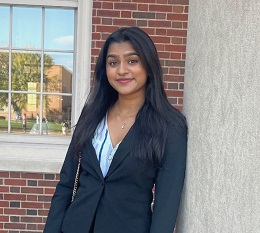
In Cox’s Bazar refugee camps in Bangladesh, violence against Rohingya women and LGBTQIA+ refugees in Myanmar’s Rohingya communities is not an exception; it is part of daily life. After decades of persecution in Myanmar, Rohingya refugees fled with the promise of safety at these camps. Instead, many encounter sexual assault, trafficking, forced marriage, and domestic violence inside the systems meant to protect them. Statelessness follows them into the camps, shaping who is believed, who is protected, and who is left vulnerable to the violence. Public discussions on the Rohingya crisis often focus on the Myanmar military’s brutality and the mass displacement that followed. Though this focus is essential, it excludes what happens once the refugees arrive. Camps are portrayed as a humanitarian “success”, measured by only the provision of food and shelter, while safety and dignity go unaccounted for. Within the camps, gender and sexuality are rarely treated as protection concerns, leaving women and LGBTQIA+ refugees exposed to suffering that is dismissed as cultural, inevitable, and beyond institutional responsibilities. The Rohingya, a predominantly ethnic Muslim minority from Myanmar, were rendered stateless and driven from their homeland. The Myanmar military’s 2017 “clearance operations” forced over 700,000 Rohingya to flee to Bangladesh. Today, nearly one million Rohingya live in Cox’s Bazar camps that were created as temporary humanitarian responses but now function as sites of confinement, where institutional neglect and legal non-recognition shape everyday life. Camps function as systems of control, masked as humanitarian protection. In practice, they function as carceral spaces where movement is restricted, access to legal resources is scarce, and daily survival relies on inadequate international aid. Statelessness follows them into camps; without an official status, refugees lack the minimal protections that even basic legal rights provide. This institutional neglect is not only the result of infrastructure failure or oversight. It is the product of deeper structural and legal exclusions that predate displacement, deepened by the very systems intended to provide refuge. Movement restrictions within Cox’s Bazar reinforce this dependence. Rohingya refugees are forbidden from leaving camps by choice, pursuing formal employment, or accessing legal systems outside humanitarian channels. When survival depends on intermediaries—aid workers, humanitarian organizations, camp leaders, or informal power brokers—abuse becomes harder to resist and easier to mask. This reliance creates power imbalances that are easy to exploit, especially for women and queer refugees whose survival is determined by obedience rather than consent. In conditions like this, abuse is not an exception to the system; it is enabled by it. For Rohingya women, gender-based violence is woven into daily survival. Early and forced marriage is widespread, often framed as protection in a context where safety is fragile and options are limited. Domestic violence is similarly normalized, worsened by overcrowded living conditions, trauma from past persecution, and economic dependence within the camps. In many cases, women engage in survival sex to secure food, shelter, and protection for themselves and their families. Although humanitarian organizations formally recognize gender-based violence as a risk, survivors continue facing barriers to reporting due to the stigma, lack of confidentiality, and fear of retaliation. According to the International Rescue Committee, 94 percent of gender-based violence in camps is perpetrated by intimate partners. Yet, reporting is extremely low due to the lack of confidential support and the stigmatized nature of assault. As international funding and aid decline, Rohingya women are increasingly facing targeted killings, trafficking, exploitation, and abuse, signifying not only growing insecurity but the humanitarian sector’s failure to adapt to gendered realities on the ground. For LGBTQIA+ Rohingya refugees, violence takes a different but equally devastating form, rooted in erasure and invisibility. Humanitarian programming often excludes queer and gender-nonconforming individuals because it is designed to protect heteronormative family structures. When humanitarian actors lack the training and resources to address non-normative gender identities, this amplifies the rejection and dehumanization from their own communities. Advocacy organizations have documented cases of conversion therapy, “corrective” violence, social isolation, and fear of exposure, yet humanitarian systems rarely track or address these abuses. As a result, LGBTQIA+ refugees are left navigating violence on their own with no recourse, leaving them unprotected by community structures and humanitarian systems. Gender-based violence in Rohingya refugee camps is often justified as a product of “cultural norms,” where early marriage, gender segregation, and controlling women’s bodies are viewed as cultural traditions. From this view, humanitarian actors hesitate to intervene, fearing cultural imperialism or threatening refugee autonomy. However, this position risks collapsing into moral relativism—justifying harm under the guise of cultural differences. The normalization of child marriage and domestic violence in camps cannot be separated from the systemic conditions that enable, conceal, and sustain these practices. The reluctance to confront harmful gender norms leads to gender-neutral programming by default, failing to provide targeted support for women and the LGBTQIA+ community. Though humanitarian actors may not be able to dismantle cultural values, they hold the responsibility to explore alternative avenues, to provide protection services, and to adopt survivor-centered approaches. Respecting culture must never mean allowing unchecked violence and abandoning survivors. The humanitarian crisis unfolding in Cox’s Bazar is not simply the result of displacement or cultural norms; it is the outcome of systems that prioritize containment over care. Structures created to protect have become systems of control that limit movement, suppress trauma, and ignore intersectional vulnerabilities of gender, queerness, and statelessness. Women and LGBTQIA+ refugees are not protected by neutrality; they are erased by it. Addressing this violence requires shifting from a gender-neutral, one-size-fits-all solution and toward trauma-informed, intersectional, and survivor-centered models of protection. The crisis in Cox’s Bazar is not only a humanitarian failure, it is a testament to how protection is defined in a world where violence and displacement are normalized. Sulakshi Ramamoorthi is a Finance and Compliance Coordinator at EMILYs List in Washington, D.C. She graduated cum laude from American University with a B.A. in International Affairs, concentrating in Identity, Race, Gender, and Culture, and a minor in Justice and Law. She founded American University's chapter of No More, an organization dedicated to ending domestic and sexual violence. Her work examines how legal and humanitarian systems shape the lived experiences of marginalized communities, particularly in contexts of displacement, gender-based violence, and survivor-centered justice.
|
|



| Contact Us | About Us | Donate | Terms & Conditions |


|
All Rights Reserved. Copyright 2002 - 2026