| Wed. April 29, 2026 | |

|
|
|
 The Chemical Weapons Convention (CWC)’s recent Executive Council Session from 10th to 13th March 2026 was the 111th session of the series. Since Pakistan was re-elected to serve its second term (2026-2028) as a member of the Executive Council, this provided yet another opportunity to promote its commitment to global disarmament. Thus, it is necessary to consider the implications of Pakistan’s participation in the meeting from several aspects, including the strengths of its compliance with the CWC, how it navigates political tensions related to certain countries, including those that have been associated with the use of chemical weapons such as, Israel in the region and Russia in Ukraine and reportedly Syria, and how it can be a leader in promoting the use of chemical technology for peaceful purposes and ensuring effective verification of compliance with the CWC. Therefore, Pakistan must take concrete steps to maximize its influence amid current and emerging challenges. Pakistan signed the CWC in 1993 and ratified it in 1997 when it agreed to eliminate the development, production, and storage of chemical weapons. Since ratification, Pakistan has declared various facilities that produce and use chemical products for industrial and agricultural purposes. These declarations have welcomed visits from inspectors from the Organization for the Prohibition of Chemical Weapons (OPCW). Pakistan has hosted numerous OPCW inspections of declared sites without incident. Consequently, Pakistan was re-elected to the 41-member Executive Council for another two-year period. As one of the few voices of the Global South in the Executive Council, Pakistan is well-positioned to counter the growing narrative that questions the compliance of countries with CWC that are located in this part of the world. In addition to addressing routine compliance review matters and approving budgets, the 111th Executive Council session was set to address what some would describe as "hot button" files, including Syria's failure to provide complete information about its stocks of Sarin and Chlorine. In addition to these issues, the session is also expected to advance the implementation of Article X, providing assistance to states parties facing a threat of chemical weapons use, and Article XI, facilitating the exchange of chemical technology for peaceful purposes and trade, and update the process of eliminating chemical weapons remnants from states that possess them. Also, the session’s highlight was Ukraine’s stance on Russia’s use of chemical weapons against them. From Pakistan's perspective, which hosts an OPCW-designated laboratory and a subregional chemical protection center, the negotiations offer an opportunity to promote fair and unbiased verification practices and to avoid politicization that undermines consensus. Israel, for one, is an issue on its own for the implementation of the CWC’s articles. Israel, being a signatory of the CWC since 1993, has still not ratified it. Israel’s reluctance to ratify CWC membership is closely linked with security concerns, regional instability, and a policy of linking ratification to neighboring Arab nations doing the same, like Egypt. Israel demands that regional neighbors, such as Egypt, join first, and is reluctant to allow inspection of its sites. The issue of Syria being part of the news for so long seems to be surpassing now. Even though recent meetings at the United Nations reflect disagreements between states regarding the assurance of Syria's destruction of its chemical weapons program and reports of new allegations of chemical weapons use, Syria has stepped up its cooperation with OPCW to address its chemical-weapons legacy. Since, there are increasing number of chemical weapon sites (established by the former government of Syria) being found recently in Syria, the OPCW will require additional funds to deal with the Syrian file. The council will need to address these issues without taking sides. The broader context of the CWC continues to see erosion of consensus in decision-making processes, as stated by Pakistan at the UN, due to the selective application of sanctions on riot control agents or undeclared programs. Pakistan has a unique advantage in advocating for all states, especially given ongoing regional instability. As the CWC has almost universal membership of 193 states, norms will likely strengthen further, provided that verification remains both robust and nondiscriminatory. Pakistan should strongly oppose the use of "challenge inspection" procedures as a tool of coercion. Although prospects appear to be positive in terms of technology, for example, the use of artificial intelligence for monitoring, there remain significant risks of stagnation due to geopolitical divisions such as those between Russia and the United States, Pakistan's re-election to the Executive Council provides a level of trust that allows Pakistan to act as a bridge between the Asian region and the developing world with respect to Article XI’s cooperative agreements and increase trade opportunities for its chemical industry. To practically take advantage of the Executive Council sessions, Pakistan needs to ensure that it sends a delegation to future Executive Council sessions that includes technical experts who can prioritize the Syrian file to request on-site verifications of Syria's chemical weapons program without preconditions. Domestically, Pakistan needs to enhance the training of personnel in its National Authority (NA) on CWC to ensure their ability to handle and submit more Confidence Building Measures (CBMs) for greater transparency. Internationally, Pakistan should co-sponsor resolutions at the OPCW to support capacity building of laboratories in the Global South and contribute modestly to OPCW operations, i.e., small investments that can provide significant diplomatic leverage. Pakistan should capitalize on future Executive Council sessions to reaffirm the consensus-based nature of CWC governance and, possibly, table a working paper on impartial verification by mid-session. In the long term, Pakistan should seek to play a leading role at the Conference of the States Parties, as it did as Conference Chair in the past, and invest in research and development in the peaceful uses of chemical technology. Not only will this safeguard Pakistan’s security posture, but it will also enhance Pakistan’s standing in the international community with regard to disarmament.
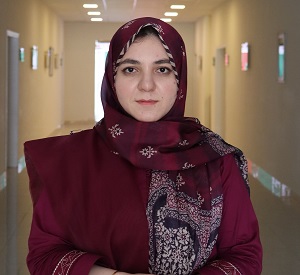
Ms. Harsa Kakar is an Assistant Research Fellow at Balochistan Think Tank Network (BTTN), Quetta. She writes opinions for Global Security Review, The Diplomatic Insights, and Strafasia. The views expressed are personal. She can be reached at kakarhsa01@gmail.com
|
|



| Contact Us | About Us | Donate | Terms & Conditions |


|
All Rights Reserved. Copyright 2002 - 2026