| Thu. June 25, 2026 | |

|
|
|
Amitav Acharya’s The Once and Future World Order is an ambitious book with an argument that is both historical and political. The world order is understood as the rules, norms, institutions, and practices by which states and peoples organise their coexistence. Acharya's central claim is that the current world order is a shared civilisational inheritance. The conventional story, as told by much of Western international relations scholarship, holds that the current order emerged from specifically Western traditions. They refer to Greek democracy, Roman law, the Peace of Westphalia, the Enlightenment, the Allied victory in 1945, and American liberal internationalism. In this telling, the decline of Western power threatens to destroy these traditions. Amitav Acharya has spent his career arguing that this fear rests on a historical illusion. A Distinguished Professor of International Relations at American University in Washington, DC, and a former chair of the International Studies Association, Acharya writes with an intellectual authority. As the first non-Western scholar to be the chair of the International Studies Association, he is one of the field's most respected voices on regional order, multilateralism, and the limitations of Western-centric theory. His 2014 book The End of American World Order anticipated the current debate by a decade. The book’s counter-history to Western claims that world order emerged in the West proceeds on two parallel tracks. The first is genealogical: he traces the specific ideas and institutions associated with the contemporary world order back to their earliest appearances, which are consistently non-Western. The second track is normative in which, having shown that these ideas emerged from multiple civilisations, he argues that they are not contingent on Western power to survive. They are, in a meaningful sense, humanity's common property. Acharya opens with familiar fears about the supposed end of world order, the decline of American power, and the rise of China and other non-Western actors. Acharya’s response is to reject the panic by arguing that Western supremacy itself has produced instability, injustice and arrogance. Many of the institutions and values now presented as uniquely Western actually emerged across several civilisations over a very long history. He therefore asks readers to imagine a future that is post-Western but essentially not post-order. Within this context, this book is an intervention in present debates on liberal order, multipolarity, China, decolonisation, and the future of international relations. The author tries to break a habit of thought. By discussing early civilisations, Acharya does not simply add forgotten civilisations to an existing story but actively rearranges the hierarchy of importance. While discussing Greece and Persia, the author argues that Greece has been romanticised by Western writers who underplay its violence, exclusion, and dependence on older civilisations. Persia, in contrast, is shown as a more durable and administratively significant force than Western memory often allows. His chapter on India is equally important. By placing Kautilya and Ashoka side by side, Acharya shows that ancient India produced both a ruthless realist theory of power and a moral vision of rule grounded in restraint, compassion and religious tolerance. This is a persuasive move because it prevents the non-West from becoming a sentimental category. The chapter on China works in a similar way. Acharya presents the tributary system as a distinct historical model of order, one based on coercion but also on ritual, trade, status, and civilisational prestige. The point he makes is that world order has taken many forms, and Europe’s model is only one among them. Even the chapter on Rome is written against habit. Rome appears here not as the unquestioned ancestor of law and civilisation, but as an empire of great achievement and enormous brutality. The discussion on Islamic civilisation is perhaps the most significant, given the prevalence of civilisational anxiety about Islam in Western political culture. Islam appears as a major civilisational zone of learning, commerce, and transmission. For five centuries, between roughly 700 and 1200 AD, the Islamic world was the primary repository of scientific and philosophical knowledge on earth. At a moment when much of this knowledge was being actively suppressed in Christian Europe, the House of Wisdom in Baghdad translated and preserved Aristotle, Euclid, Hippocrates, and Pythagoras. Ibn Rushd's commentaries on Aristotle were the intellectual scaffolding on which Thomas Aquinas built his synthesis of faith and reason. Ibn al-Haytham's optics gave the Renaissance its mathematics of perspective. Without this transmission, Acharya argues, there is no Scientific Revolution. Later, the author argues that the rise of the West was inseparable from imperial violence, especially in the Americas, Africa and Asia. Europe did not simply out-innovate the rest. It also conquered, extracted, enslaved and reorganised the world in its favour. The chapters on the lost world of the Americas and on Africa are therefore crucial to the book’s argument. They show that European expansion was destructive as well as constitutive. The wealth, land, labour and resources seized through conquest helped create the global conditions of Western ascendancy. In discussing Bandung and decolonisation, Acharya restores agency to postcolonial states and shows that they were not merely passive entrants into an order designed by others. Through anti-colonial politics, demands for racial equality, sovereignty, and a more inclusive international system, they pushed the moral and political boundaries of the postwar world. Bandung is treated as a turning point because it was the first intercontinental gathering of non-Western nations held on their own soil, a moment when former colonies declared themselves sovereign actors rather than objects of policy. This leads into the chapters on Europe’s double standard and the American-led order. The author argues that Europe universalised ideas like sovereignty and civilisation only selectively. It defended rules when they served European powers and suspended them when they stood in the way of colonial expansion. The same pattern survives in the supposedly liberal American order. The US built institutions of cooperation, but it also operated within a longer imperial history and often applied universal principles unevenly. By the final chapter, Acharya gathers the whole book into three claims. First, the world order has always been a shared civilisational enterprise. Second, the coming order will be multi-civilisational rather than dominated by a single power. Third, a post-Western order need not be catastrophic. He predicts something of a “global multiplex” in which many actors, large and small, shape order together. The strongest part of the book is the deliberateness with which he places non-Western contributions at the centre rather than the periphery. The Amarna diplomatic system, the network of correspondence among the great powers of the ancient Near East in the fourteenth century BC, is presented as the world’s first prototype of great power management. In this arrangement, Egypt, Hatti, Babylon, Mitanni, and Assyria maintained an international order through gift exchange, dynastic marriage, and carefully negotiated equality of status. The Treaty of Kadesh, signed in 1259 BC between Ramesses II and the Hittite king Hattusilis, contains provisions on non-aggression, mutual defence, and extradition of dissidents comparable to the founding principles of the United Nations. Additionally, the book changes the scale at which the history of world order begins. Most books on world order begin with Europe, the balance of power, the world wars, Bretton Woods, or the Cold War. Acharya begins much earlier, and the familiar claims of Western uniqueness start to look less like facts and more like narrative. It forces the reader to question the very archive from which modern international thought has been built. Moreover, the book speaks with moral confidence in asserting that empire, racism, and colonial violence were not incidental to the making of the modern order. These practices built the foundations of the modern world at the cost of deprivation in the colonised world. The author is also right to argue that non-Western societies were not merely victims or latecomers. Throughout their history, they birthed institutions, ideas, and norms that still matter. For instance, the chapter on Bandung shows that decolonisation was not just a transfer of flags. It was also an intellectual and diplomatic challenge to the terms on which the world had been organised. The book is an expansive civilisational history, but some sections feel compressed. The sections, especially those on Greece, Persia, India, China and Europe, are richly developed. However, chapters on Africa and the pre-Columbian Americas read as condensed historical explanations. These chapters sometimes read less as fully unfolded histories and more as corrective insertions into a bigger argument, as if Acharya includes them only for principled reasons. To conclude, The Once and Future World Order is a bold, revisionist, and deeply provocative book. Its main achievement is that it brings attention to the overlooked contribution of the non-Western world to the world order. It proves every analogy beyond dispute and widens the reader’s imagination, and shows that the world order did not begin in Europe. The Western dominance was historically brief rather than eternal, and the future need not be imagined only through the language of Western loss.
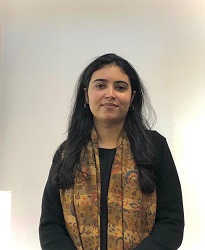
Zunaira Sarfraz is a Research Assistant at the Centre for Aerospace and Security Studies (CASS), Lahore. She can be reached at info@casslhr.com.
|
|



| Contact Us | About Us | Donate | Terms & Conditions |


|
All Rights Reserved. Copyright 2002 - 2026