| Sun. July 26, 2026 | |

|
|
|
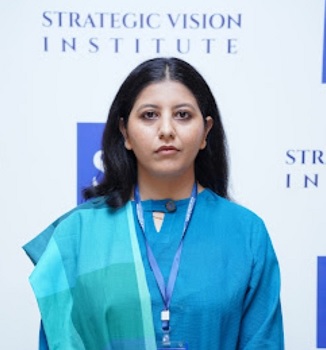 "We wiped it out, and they want to start all over again. They are at this moment pursuing their sinister ambitions." These were the words President Donald Trump used during his address to a joint session of Congress on February 25, 2026, just three days before ordering a strike on Iran. The speech was aimed to spread alarm and painted Iran as a rogue regime, a ticking nuclear clock, and an existential threat that demanded immediate action. What Trump did not tell Congress was that U.S. intelligence agencies a different assessment than President Trump’s characterization of the Iranian nuclear threat. What he also did not mention was that the decision to go to war had already been made by Prime Minister Benjamin Netanyahu weeks earlier through months of sustained Israeli lobbying that culminated in a classified Situation Room briefing. The war against Iran was not a geostrategic necessity for the U.S but a war of choice and arguably the most consequential and avoidable strategic miscalculation of the Trump presidency to date. The warning signs of this military campaign were expressed by General Dan Caine, Chairman of the Joint Chiefs of Staff, who raised explicit concerns that a military campaign against Iran carried serious risks, including casualties, depletion of air defense inventories, and the very real danger of uncontrolled escalation across the region. Moreover, President Trump did not consult with regional and NATO allies and did not seek a broad coalition. The one ally that was consulted was Israel. Through months of sustained lobbying, Netanyahu's government carefully presented a conflict that would be swift, surgical, and decisive. The Mossad's chief, David Barnea, painted an optimistic picture: Iran's ballistic missile program could be neutralized in weeks; street protests would erupt; opposition forces would rise; the regime change would follow. However, American intelligence analysts on February 12 assessed these claims and found them false. Regardless of these concerns and assessments, on February 28, President Trump proceeded with war plans. The stated objectives of the war were to destroy Iran's missile capabilities and its capacity to rebuild them; dismantle the Iranian navy; ensure Iran could never obtain a nuclear weapon; sever Tehran's ability to fund and direct its regional proxy network, and regime change. Little of these objectives was achieved. Iran’s Supreme Leader Khamenei was killed, but the regime survived and it was replaced by a hardliner whose grip on power is as firm as their predecessors. Moreover, the approximately 400 kilograms of enriched uranium that American planners hoped to extract or destroy was never secured. Third, Iran's missile and drone program remains largely intact despite the White House claim that they have functionally destroyed Iranian missile capability. It survived because it was built and hardened over the time span of forty years and refined through careful study of regional and global conflicts such as the Armenia-Azerbaijan conflict and Russia's war in Ukraine. The most consequential aspect of this war is not that the U.S failed to achieve its objectives but that it was launched in direct and irreconcilable contradiction to the United States' own declared strategic doctrine. The National Security Strategy published in December 2025 is explicit: the United States would refocus on its own hemisphere and de-prioritize the Middle East because “it is no longer constant irritant and potential source of immediate catastrophe” (page 27-29). The language of the strategy is clear and the reasoning is sound. However, barely after two months, the administration that crafted the NSS launched a major war in the very region it had formally decided to step back from. This is not a minor policy inconsistency but a failure of governance at the highest political level. Furthermore, previous administrations, both Democrat and Republican, understood the value of strategic restraint when it came to Israeli objectives in the Middle East. They supported Israel's security while carefully avoiding the entanglements that would drag American power into conflicts that served Israeli interests more than American interests. Wars are expensive and this one has been particularly more expensive. According to Pentagon officials, by the end of April, the U.S has spent $25 Billion on Iran war which is equivalent to the entire budget of NASA for 2026. The United States expended enormous quantities of high-value precision munitions, stocks that take years and significant industrial capacity to replenish. American military infrastructure across the Middle East sustained serious physical damage. And the global economic fallout from Iran's closure of the Strait of Hormuz has imposed costs not just on the United States but on every economy connected to global energy markets. Iran demonstrated that a regional power can effectively threaten and close one of the world's most critical maritime chokepoints and introduced a genuinely new variable into international security. For American foreign policy, alliances have been among the most durable and valuable instruments. They have multiplied American power, extended American influence, and provided the legitimacy that unilateral action cannot. This war has damaged that instrument in ways that will take years to repair. First, America's allies in the Middle East, except Israel, were not consulted before starting a war which would impact regional dynamics and more directly, the allies that host American bases. The implicit lesson they drew, from this fiasco, is that U.S. security guarantees are conditional, Israel-centric, and ultimately unreliable for anyone else. Similarly, this war has strained the U.S relations with NATO allies. On March 16, NATO allies rejected Trump’s call to join efforts to secure the coast of Iran and reopen the Strait of Hormuz. This shows that the U.S allies in Europe and Asia-Pacific are now more cautious and skeptical of American decision making and they might assume that the American security umbrella is not always available to them. John Mearsheimer in his book “How States Think: Rationality of Foreign Policy” states that rationality requires a deliberate process and its decision must be rested on credible theory on how the world works. Through this lens, the Iranian case would show the Trump Administration as irrational because the decision making was kept deliberately limited and mostly confined to the situation room. Secondly, the hypothesis presented to President Trump by his Israeli counterpart was not a credible option but wishful thinking. A rational actor should have assessed Israeli theory of Iranian collapse against Iranian resistance in the Iran-Iraq war and against western sanctions. Trump Administration entered an unnecessary war and now it is left to survey the wreckage of a war fought in direct contradiction of its own strategic doctrine, for objectives it could not achieve, at a cost it is still calculating. However, Pakistan has been continuing diplomatic work to bring both sides back to the negotiating table and permanently end the conflict. The true conclusion of this war will not be measured in munitions expended or bases damaged. It will be measured in terms of American reliability and American stature as a superpower. Sidra Shaukat is a research officer at the Strategic Vision Institute (SVI), a leading Pakistani think tank focused on nuclear and strategic affairs. She works on issues related to the peaceful uses of nuclear technology and nuclear non-proliferation. Her research and commentary have addressed peaceful uses of nuclear technologies, Pakistan’s Nuclear Regulatory Authority, nuclear diplomacy, and broader geostrategic developments in South Asia, the Asia Pacific, and the Middle East across various platforms.
|
|



| Contact Us | About Us | Donate | Terms & Conditions |


|
All Rights Reserved. Copyright 2002 - 2026